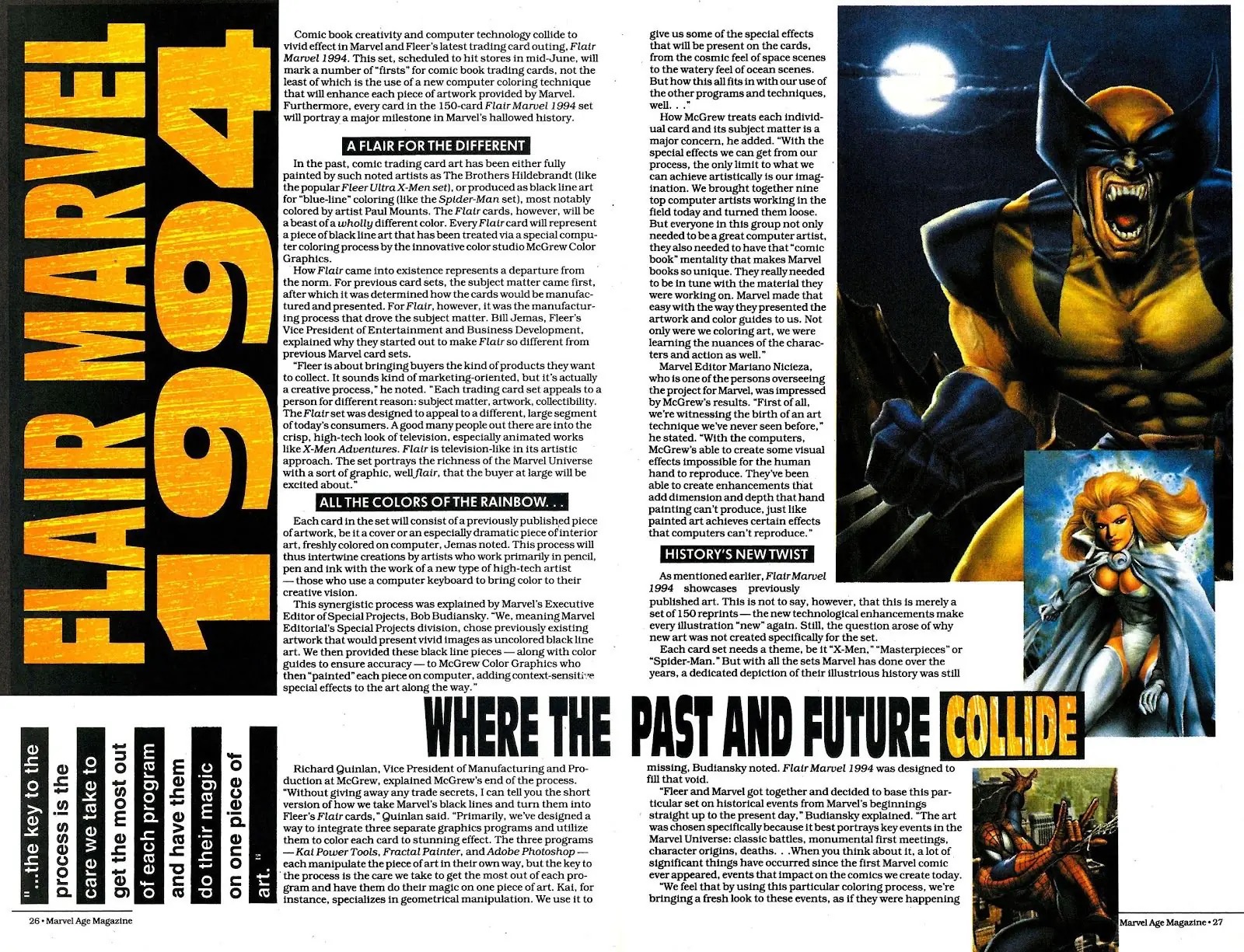
Marvel Age #138, pages 26–27Flair Baseball, the year beforeFour pack covers. Pick one.The issued hobby box
Marvel Age #138, pages 26–27
The 1994 launch
Marvel and Fleer announce the set.
1994. Marvel and Fleer announce Flair Marvel 1994, set to hit stores in mid-June. The sentence is from the July magazine, Jerry A. Novick’s feature, “Where the Past and Future Collide,” pages 26–28. It is a preview. The issued checklist came later.
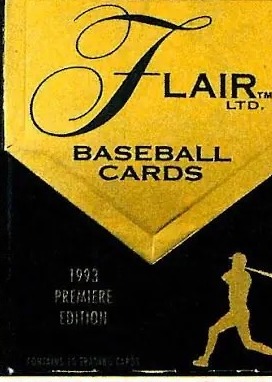
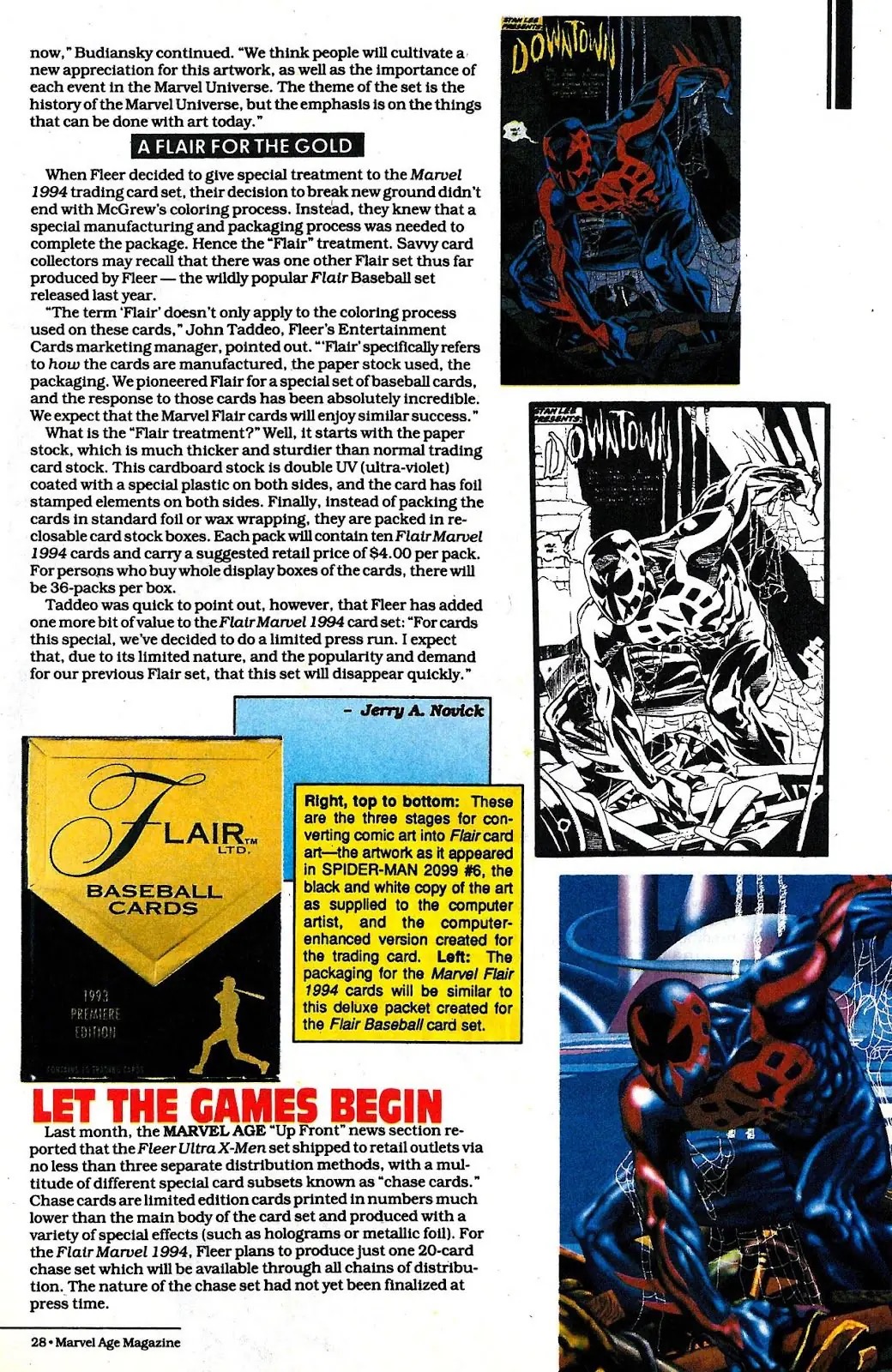
The brand was borrowed from Fleer’s Flair Baseball set from the year before. John Taddeo, Fleer’s marketing manager, told Marvel Age that Flair was the way the cards were made: the stock, and the package. The magazine printed the baseball pack beside the new one.
“Flair” meant the card in your hand.
Thick stock, double UV coated on both sides, and foil stamped on both sides. No wax packs. The article said ten cards in a resealable card-stock box, $4.00 a pack, 36 packs in a display box.
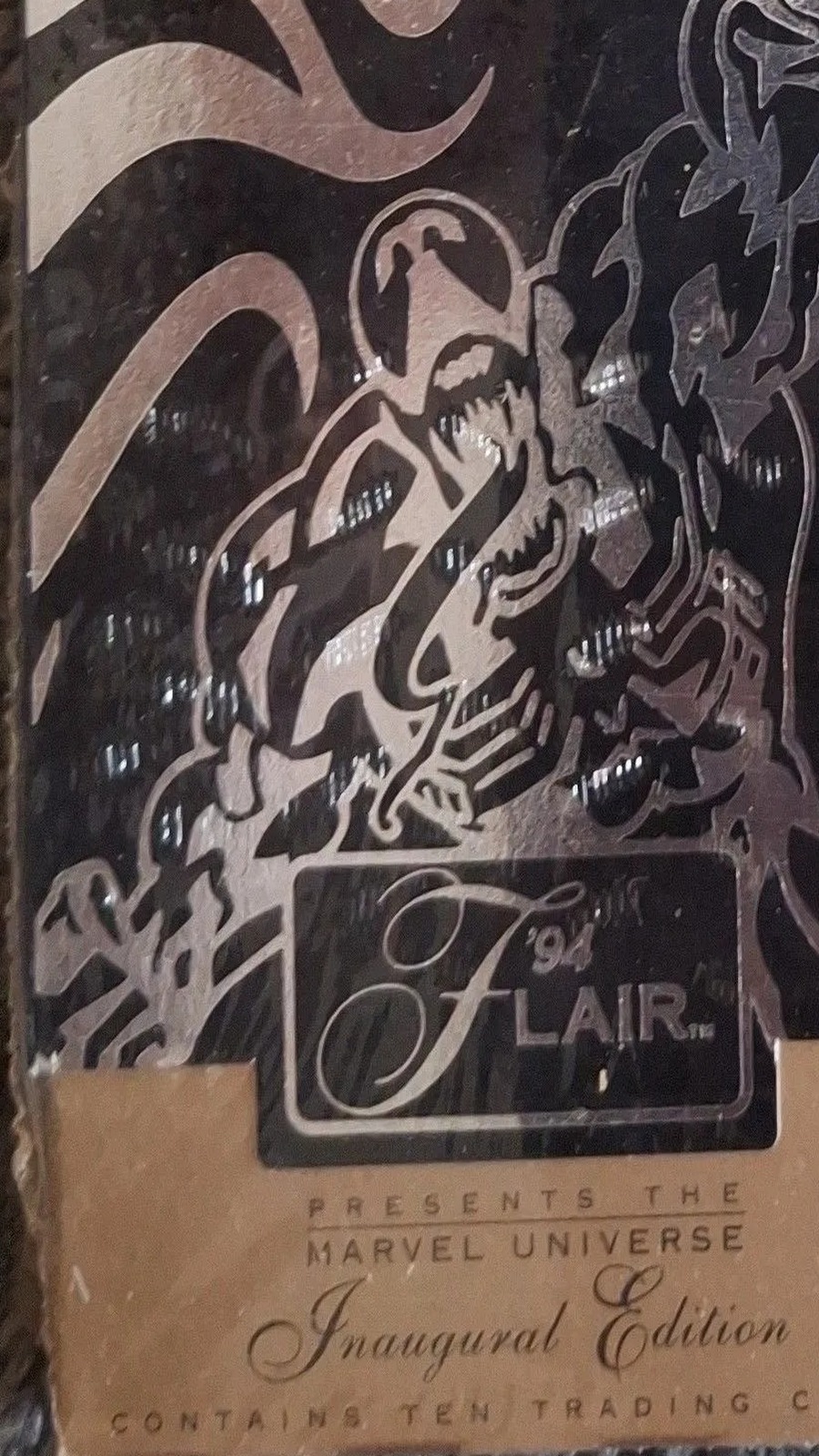
The issued packs match the description: thick cardboard mini-boxes, shrink-wrapped, four covers. Venom, Magneto, Cyclops, Wolverine. Pick a cover.
A limited run, and a chase set that wasn’t finished.
Fleer promised a limited press run, plus a single 20-card chase set. The theme was Marvel’s history, “from Marvel’s beginnings straight up to the present day.” Bob Budiansky, Marvel’s executive editor of special projects, listed what the art had to carry: “Classic battles, monumental first meetings, character origins, deaths…”
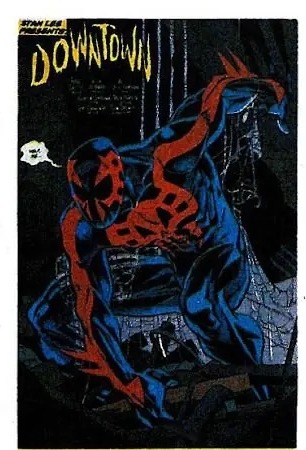
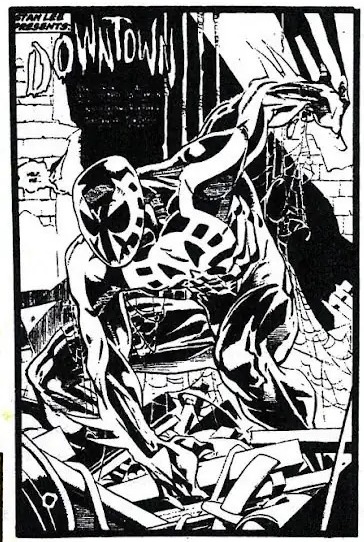
McGrew “painted” each piece on a computer. Nine computer artists. Three programs: Kai Power Tools, Fractal Painter, and Adobe Photoshop. Richard Quinlan named them. Mariano Nicieza, the Marvel editor watching the job, put a line on it that the magazine printed whole.
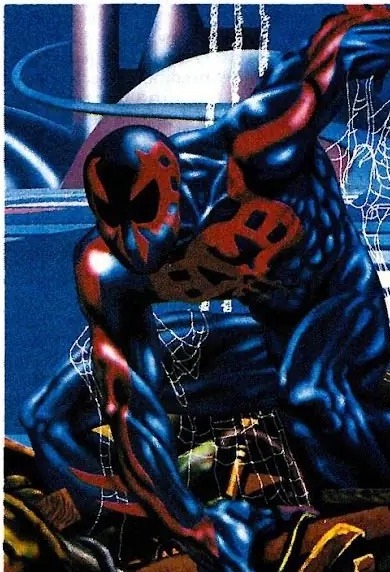
Marvel Age showed the method on a page from Spider-Man 2099 #6: the printed comic, the black-and-white copy, and the computer-enhanced Flair version. Card #94, “The Origin of Spider-Man 2099,” is that page, penciled by Rick Leonardi. The magazine’s third frame is the process, not a claim that the photo is the issued card.
The article said previously published covers and interior pages, recolored, with special effects.
Research confirms that path on most of the set. It also finds crops, flips, merch, and sketches the article never itemized.
Still open A few cards do not give the source up. Those files are at the end.
Source left · card right
Display left · card right
Shirt left · card right
Cover left · chase card right
Poster left · card right
Sketch left · card right
Pin-up left · card right
The art detective
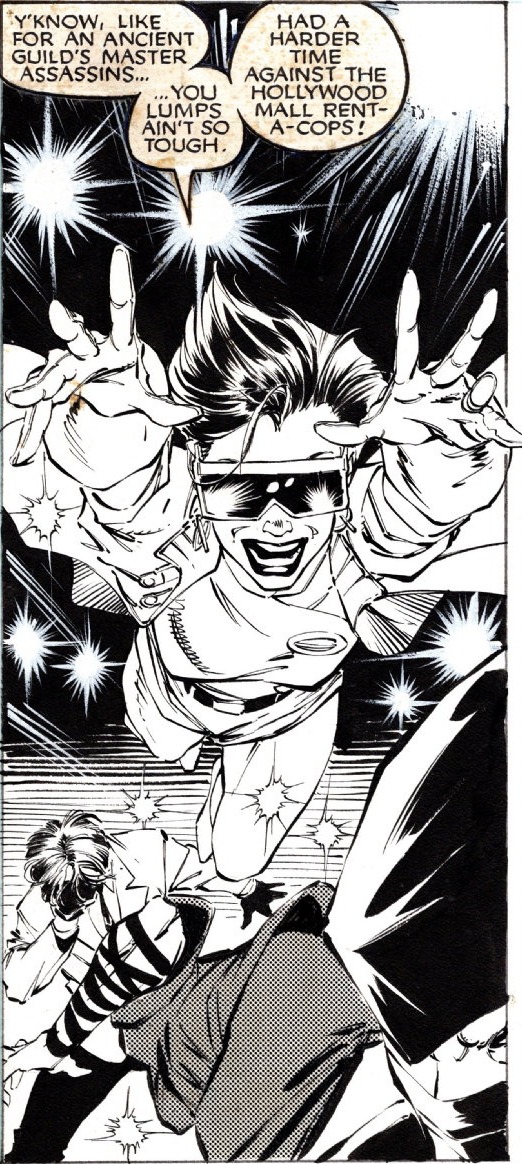
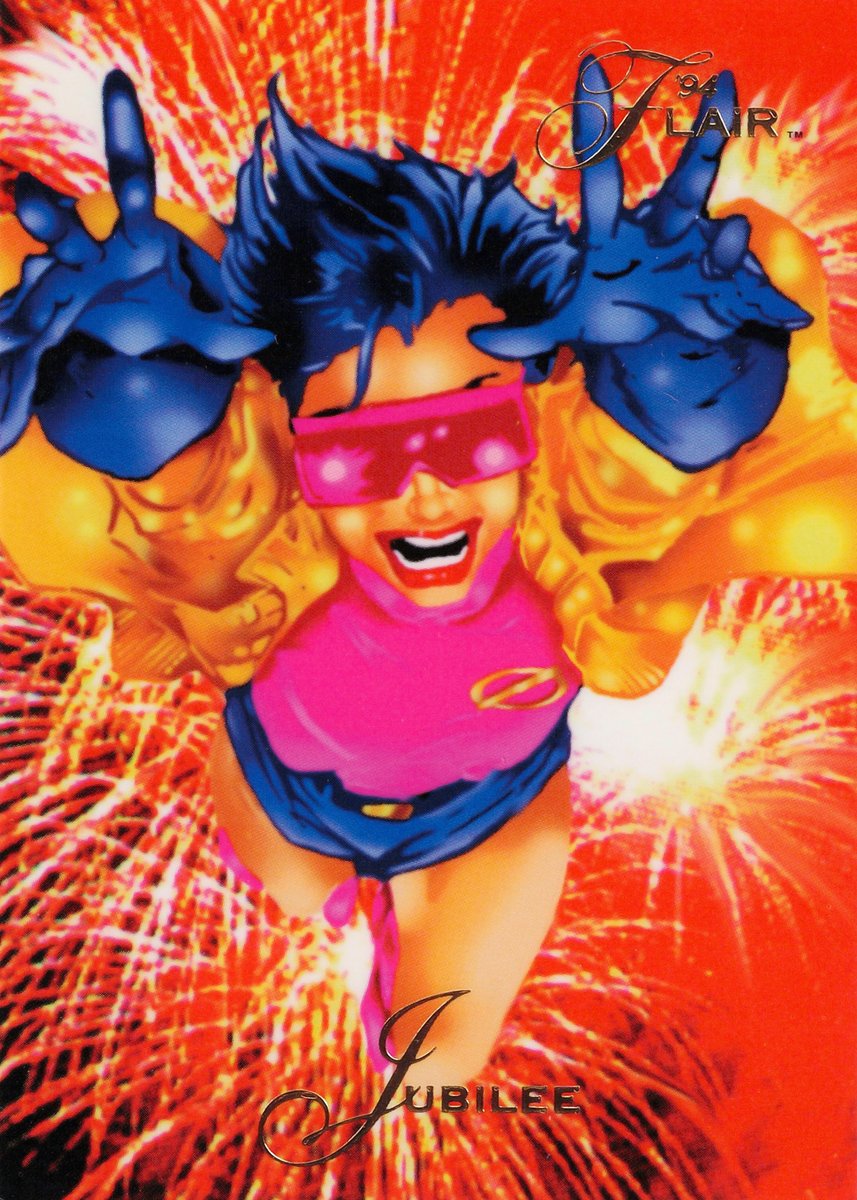
#58 Jubilee, the right page.
An earlier match pointed at the Uncanny X-Men #244 mall page. That was the wrong image. The source is Jim Lee and Scott Williams, Uncanny X-Men #258 (1990), page 9, panel 1. Jubilee in mid-leap. Flair cropped the ninja at the bottom left, added color, and filled the background with fireworks. The art was not flipped. The owner of the original art has said on ComicArtFans that this panel was used for the card.
Drag the bar. Source on the left, card on the right.
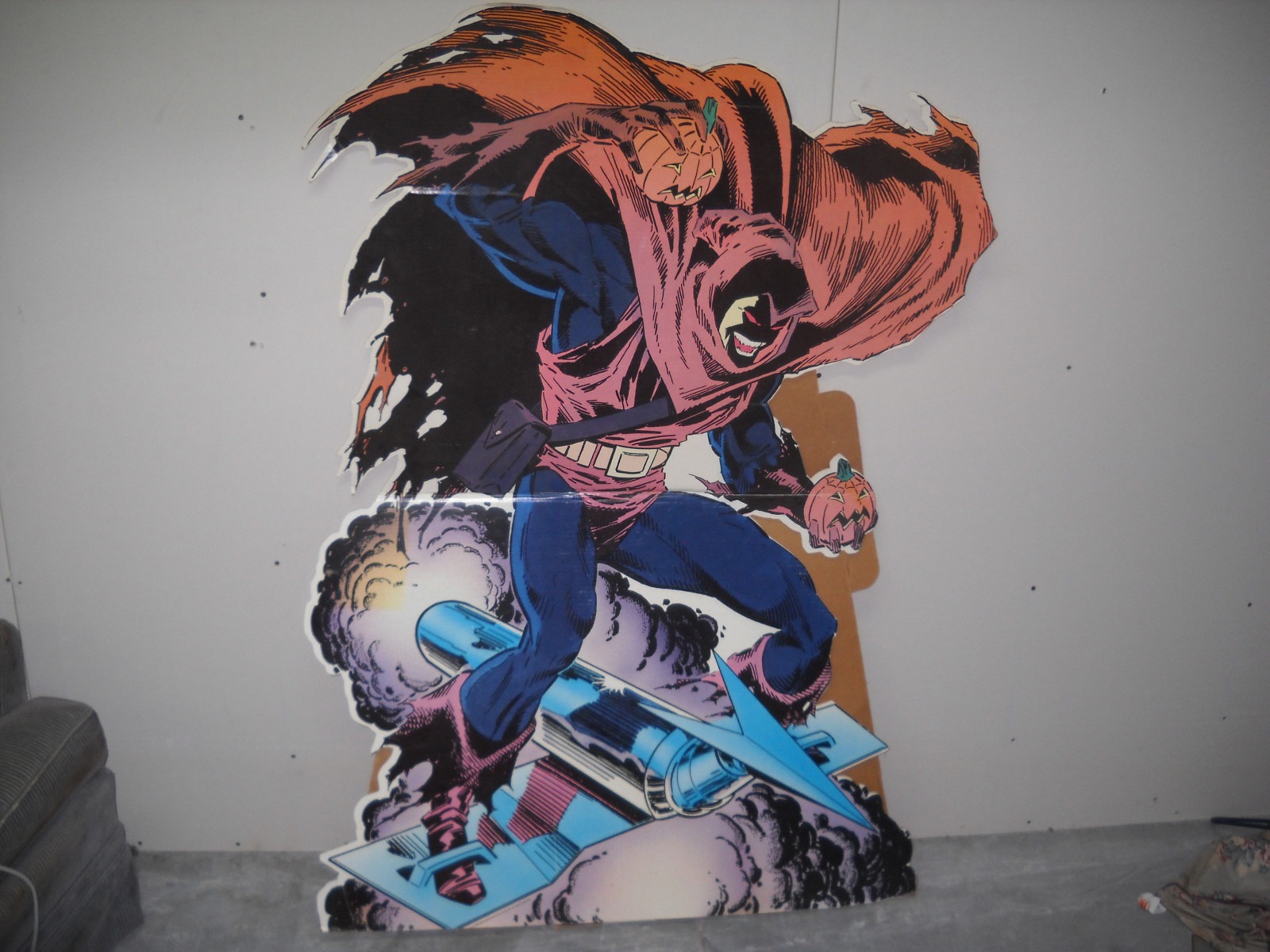
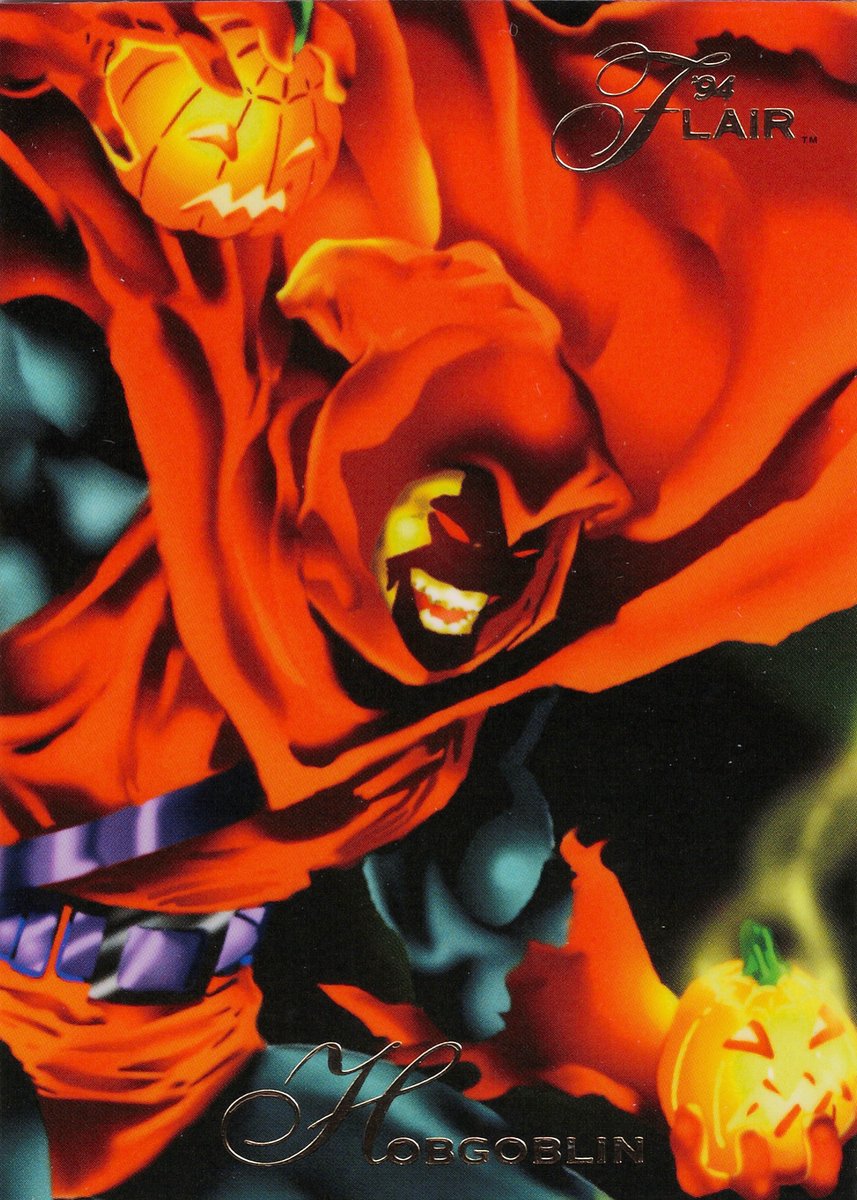
#44 Hobgoblin, cut from a shop display.
“Hobgoblin Appears” is not from a comic. It is a crop of Marvel’s 1987 Hobgoblin stand-up, a five-foot cardboard figure made for comic shops. The card matches a photograph of that display. No signature is visible. The artist is unknown.
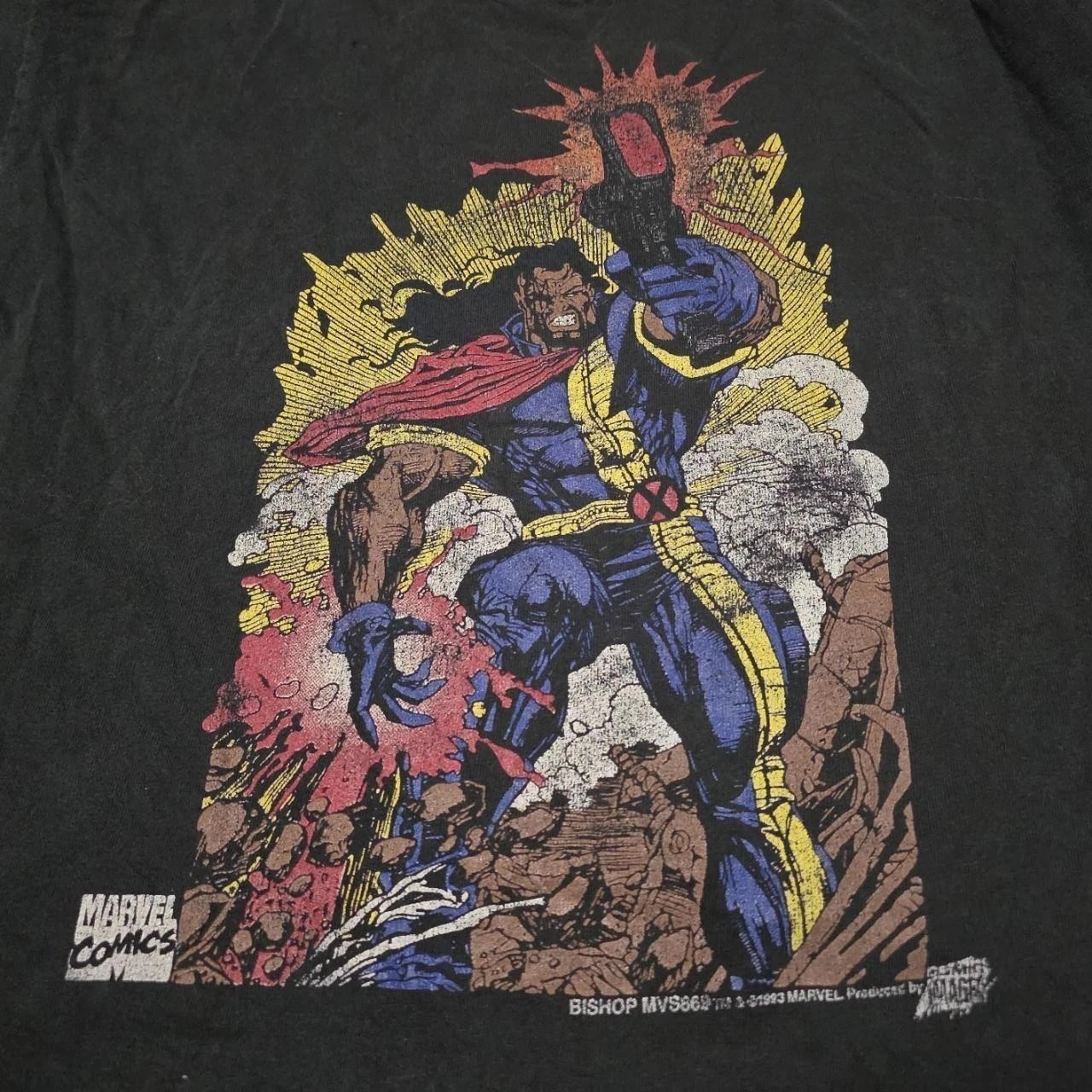
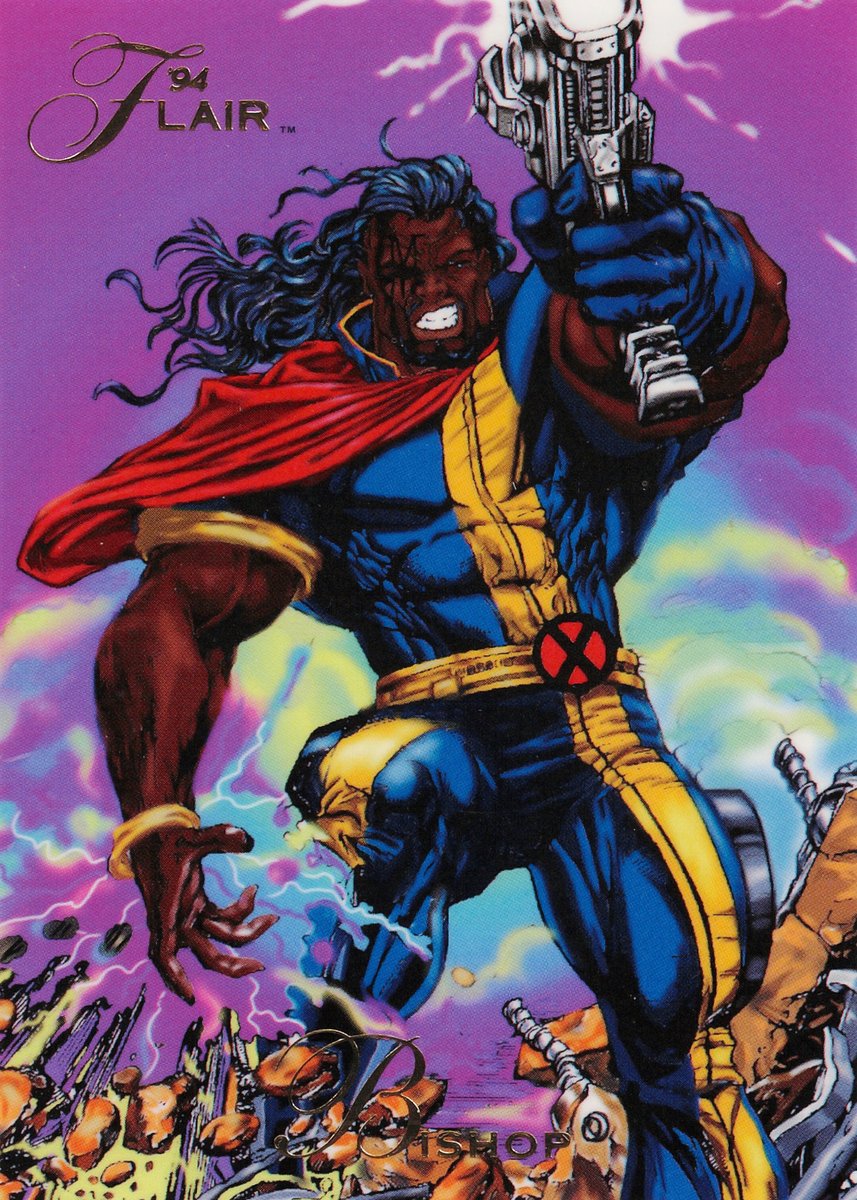
#85 Bishop, from a T-shirt.
The card is titled “The Origin of Bishop.” The figure is a 1993 Comic Images T-shirt, item MVS868. Flair kept the pose and repainted the background. The artist is unknown.
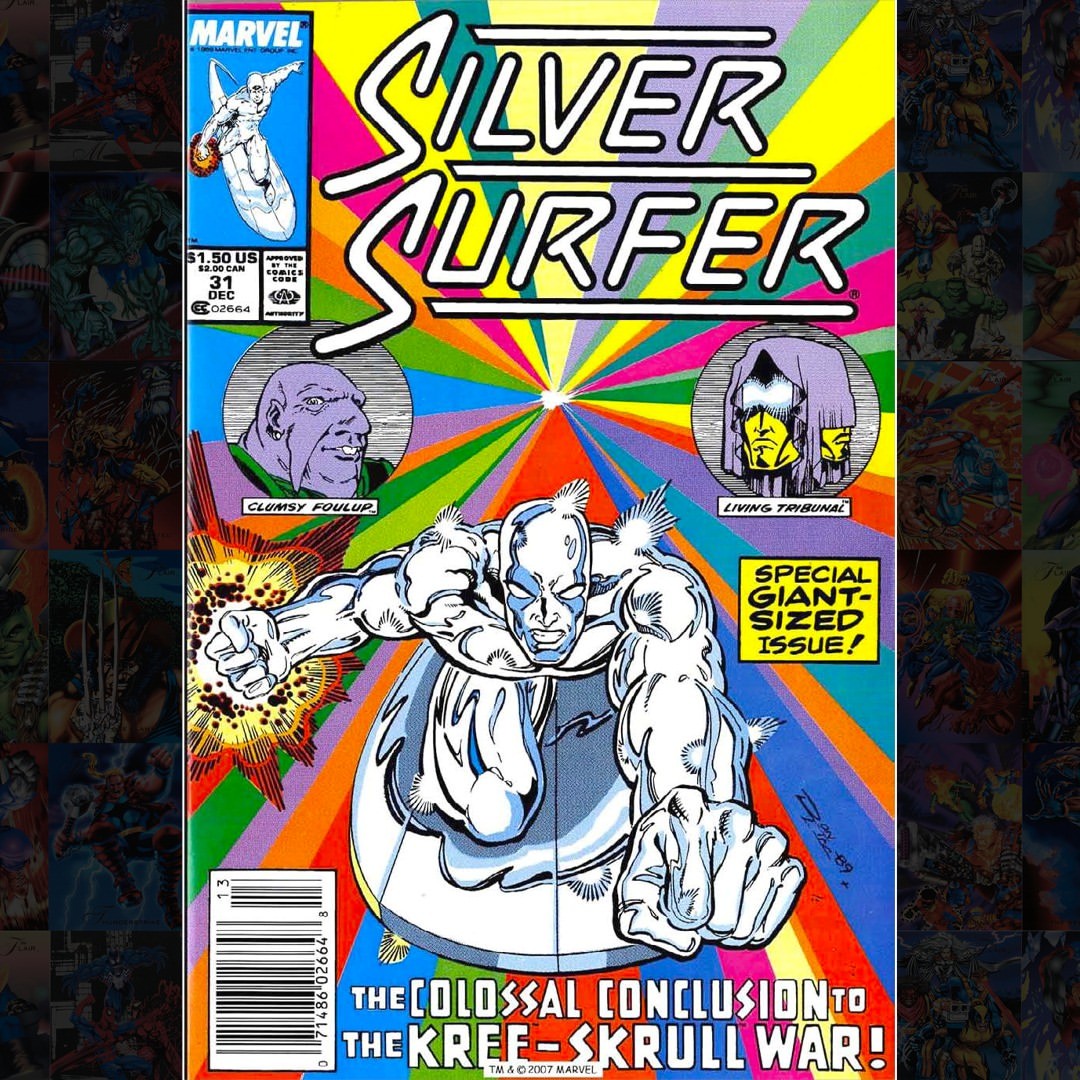
Powerblast #14, flipped.
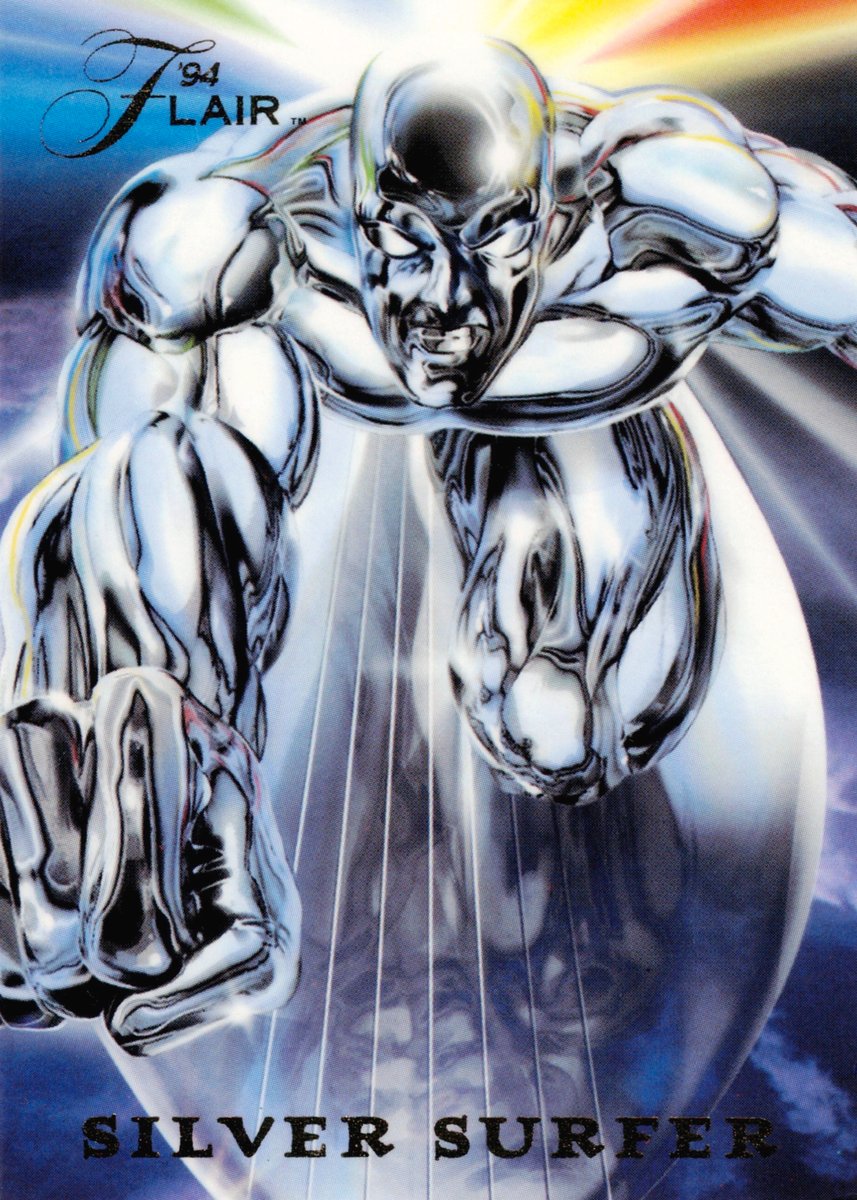
Silver Surfer (1987) #31, the 1989 cover. Flair flipped it horizontally, so the Surfer faces the other way. The checklist gives no artist, so the artist is unknown here.
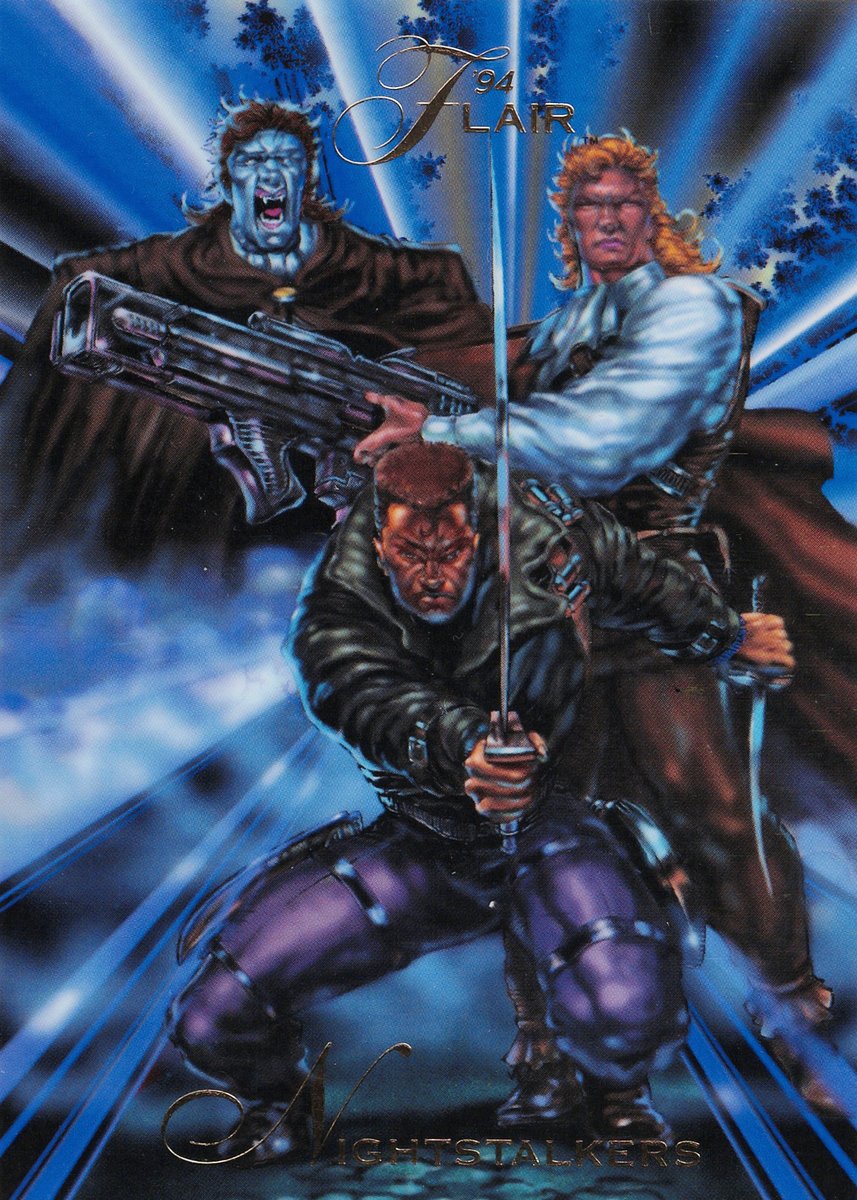
#93 Nightstalkers, recolored.
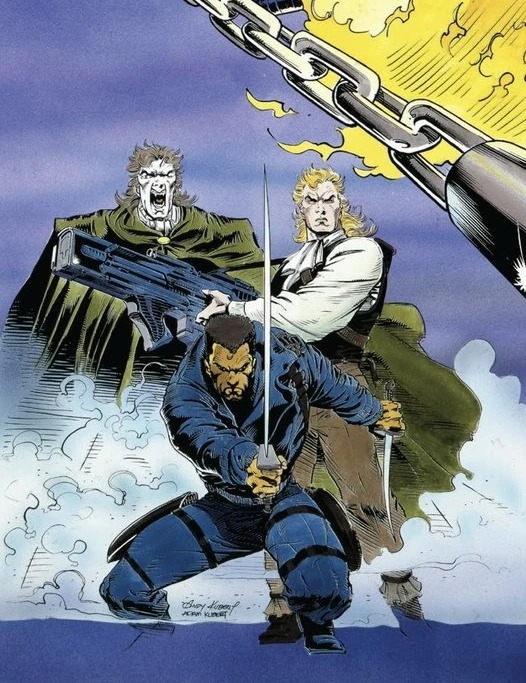
The bonus mini-poster in Nightstalkers #1. Andy Kubert pencils, Adam Kubert inks. McGrew took it blue and purple, added a burst of light, and dropped the chain and the fiery sky. One of the larger changes the studio made.
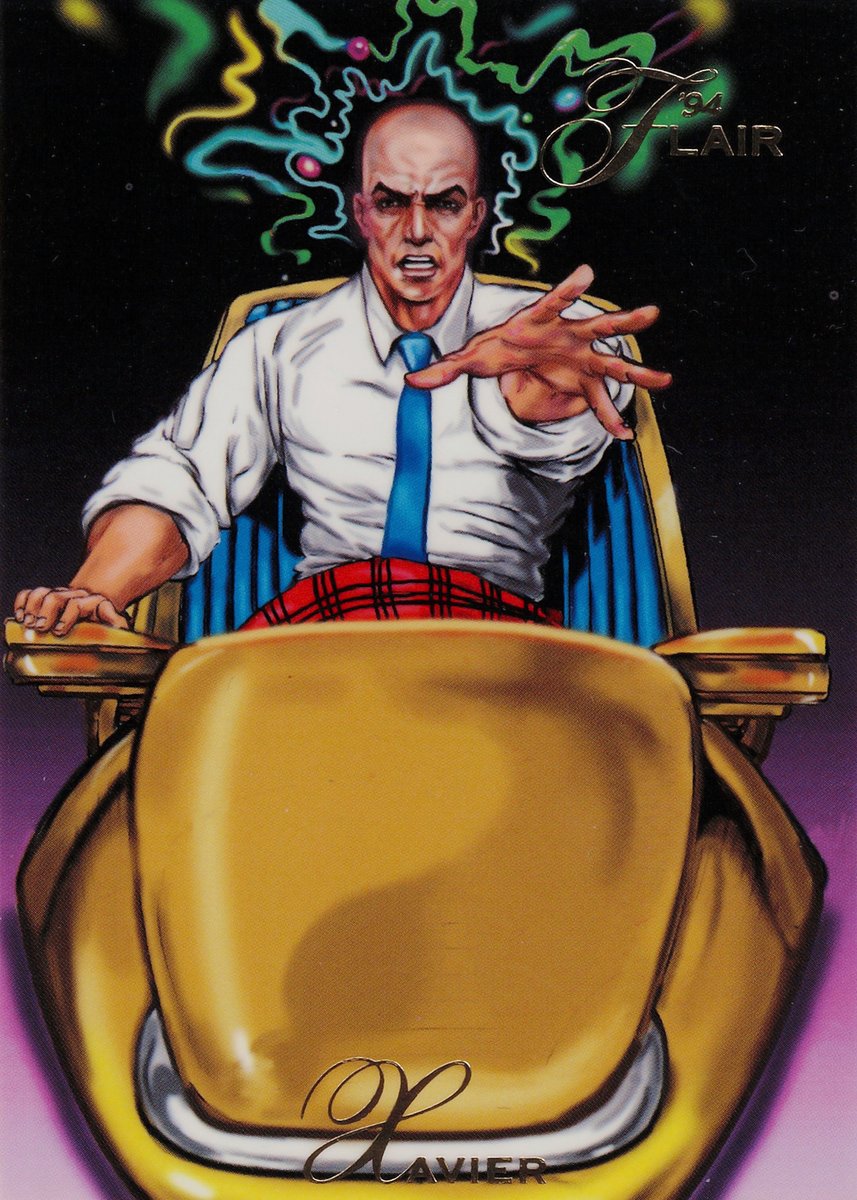
#10 Xavier, one sketch on many products.
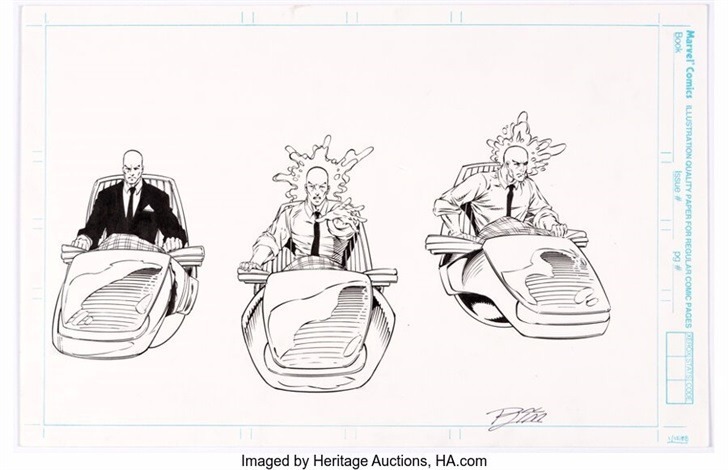
Not a comic page. Ron Lim’s in-house sketches. Marvel kept reusing them: X-Men playing cards in 1994, a store counter standee in 1995, X-Men magnets in 1996.
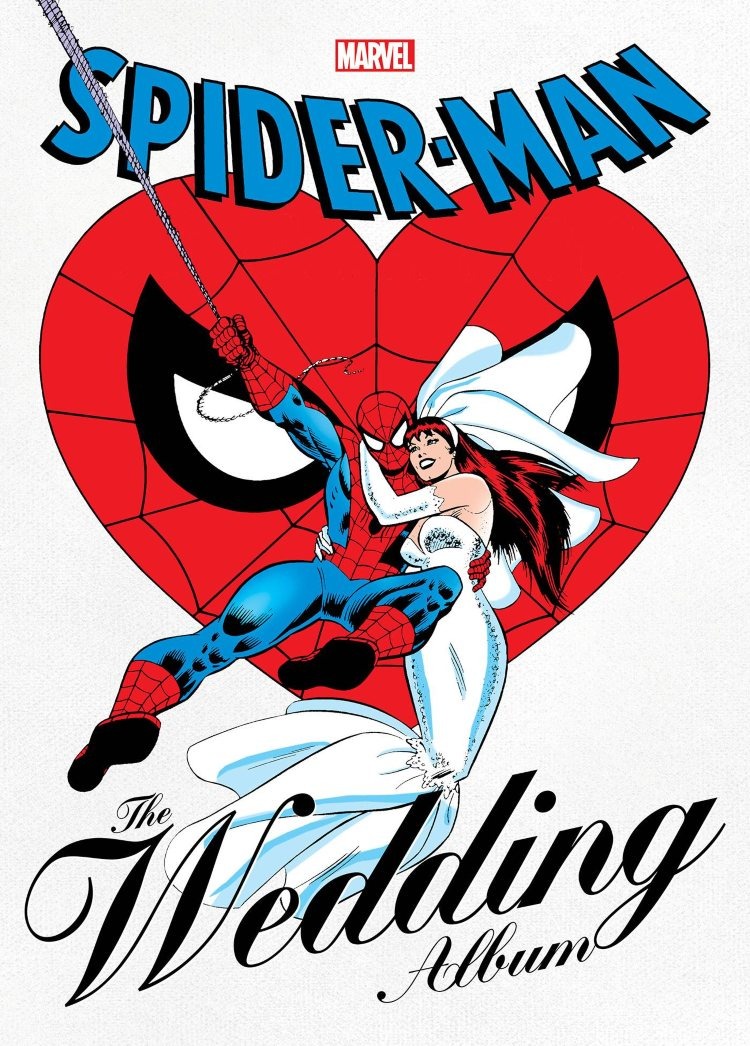
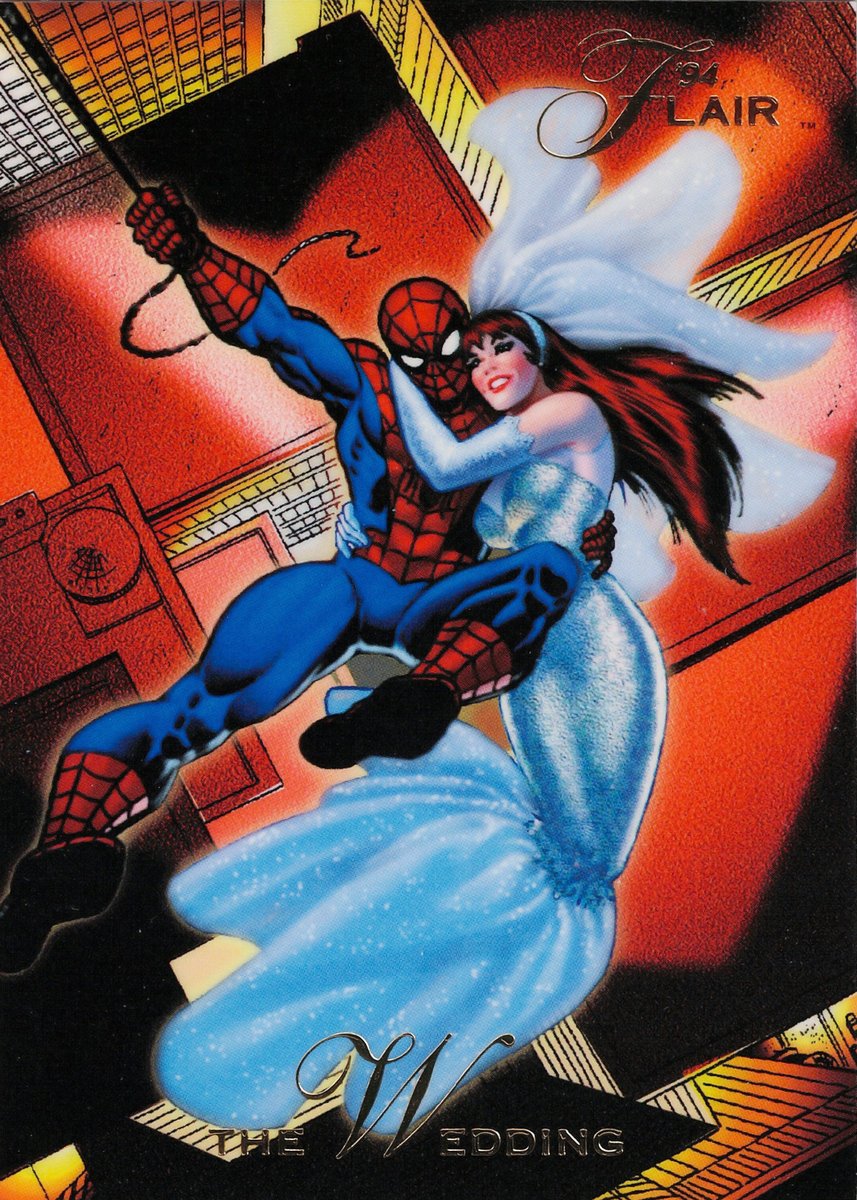
#57, swinging into the wedding.
John Romita Sr.’s drawing of Spider-Man with Mary Jane, inked by John Romita Jr. Flair swapped the heart backdrop for a city. The art match is high-confidence. Its first appearance in the Web of Spider-Man Annual #4 (1988) wedding pin-up is likely, not verified, and the page number is unconfirmed. The picture here is the 2022 Spider-Man: The Wedding Album Gallery Edition reprint.
The article said a cover, or a dramatic interior.
These seven are a cover, interiors, a poster, a sketch sheet, a shop display, and a shirt. Two of the artists are still unknown. That is the whole of Hobgoblin and Bishop. They are not reopened later.
Powerblast
One in every two packs.
Under the 150 base cards were 18 Powerblasts, the prismatic, metallic-enhanced chase set. They turned up about 1 in every 2 packs, about 12 a box. Marvel Age had described one 20-card chase set that was not finished. Eighteen is what shipped.
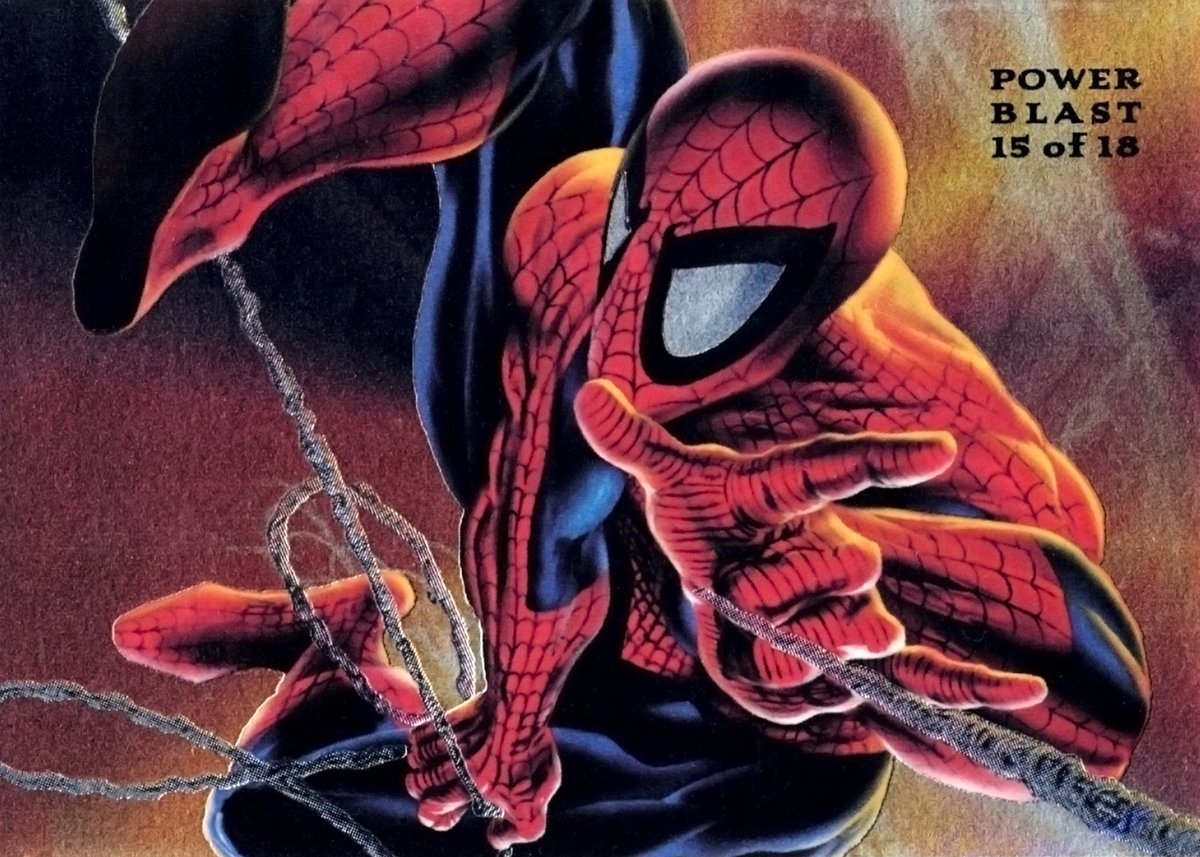
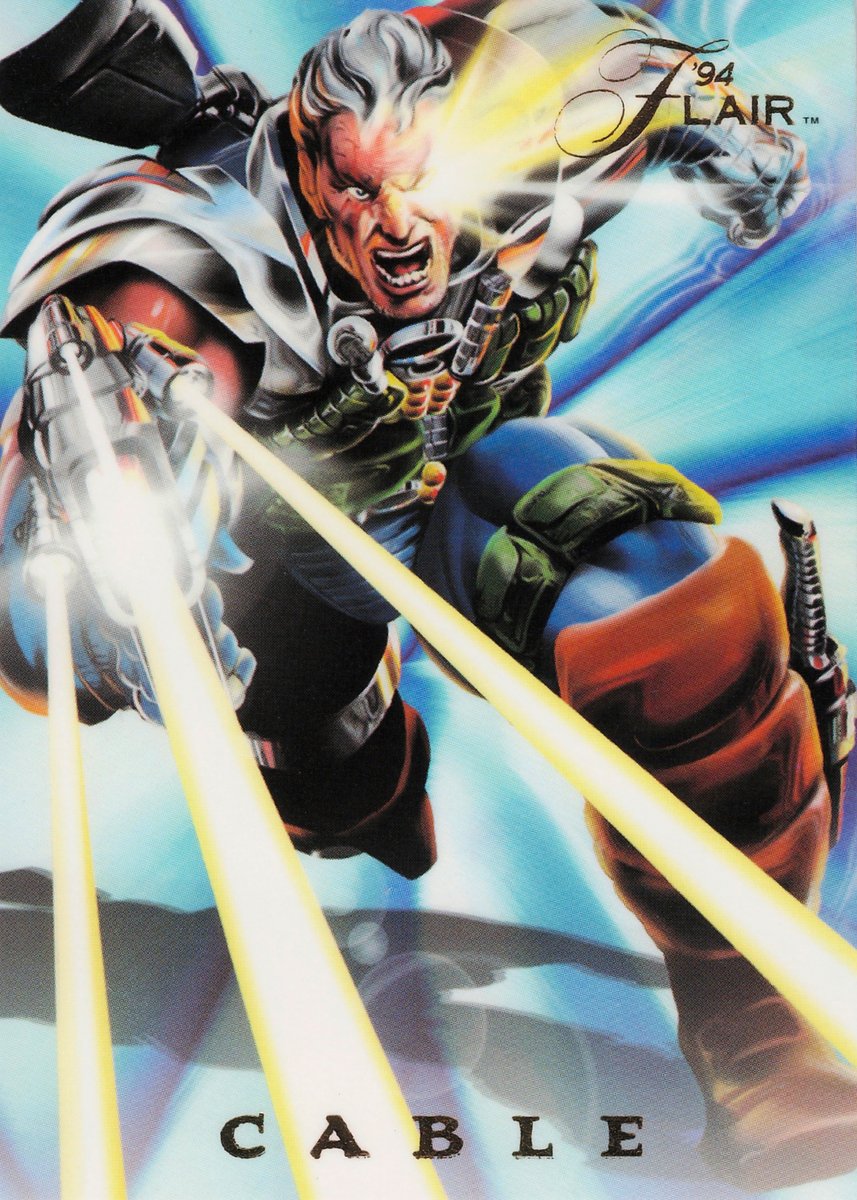
Like the base cards, most Powerblasts are repainted existing art. Cable is the X-Men #25 hologram, Greg Capullo. Spider-Man is Amazing Spider-Man #322, page 8, Todd McFarlane. Tilt this one.
Powerblast #1 · Cable
X-Men (1991) #25, Cable hologram. Greg Capullo.
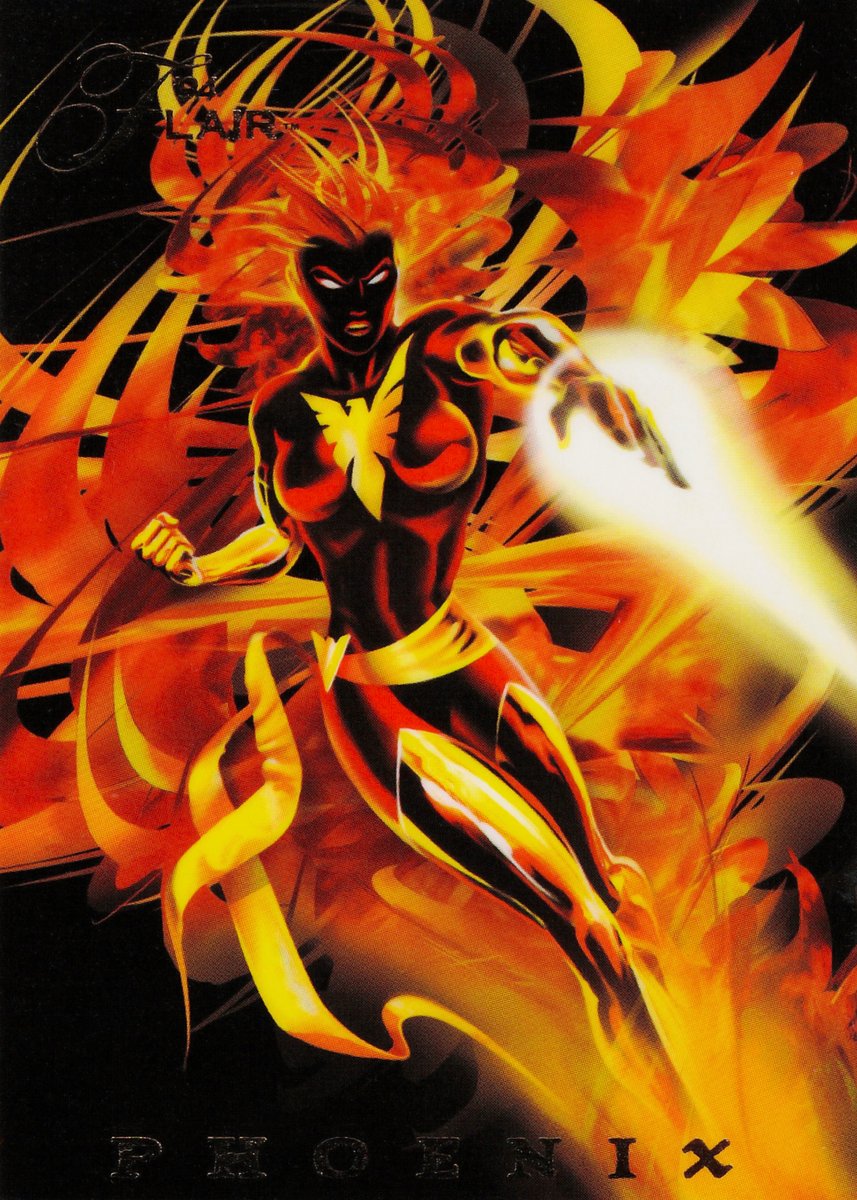
Powerblast #5, Phoenix, is the open case. The wording is in the unsolved files, once.
Flairprints
Bigger is better.
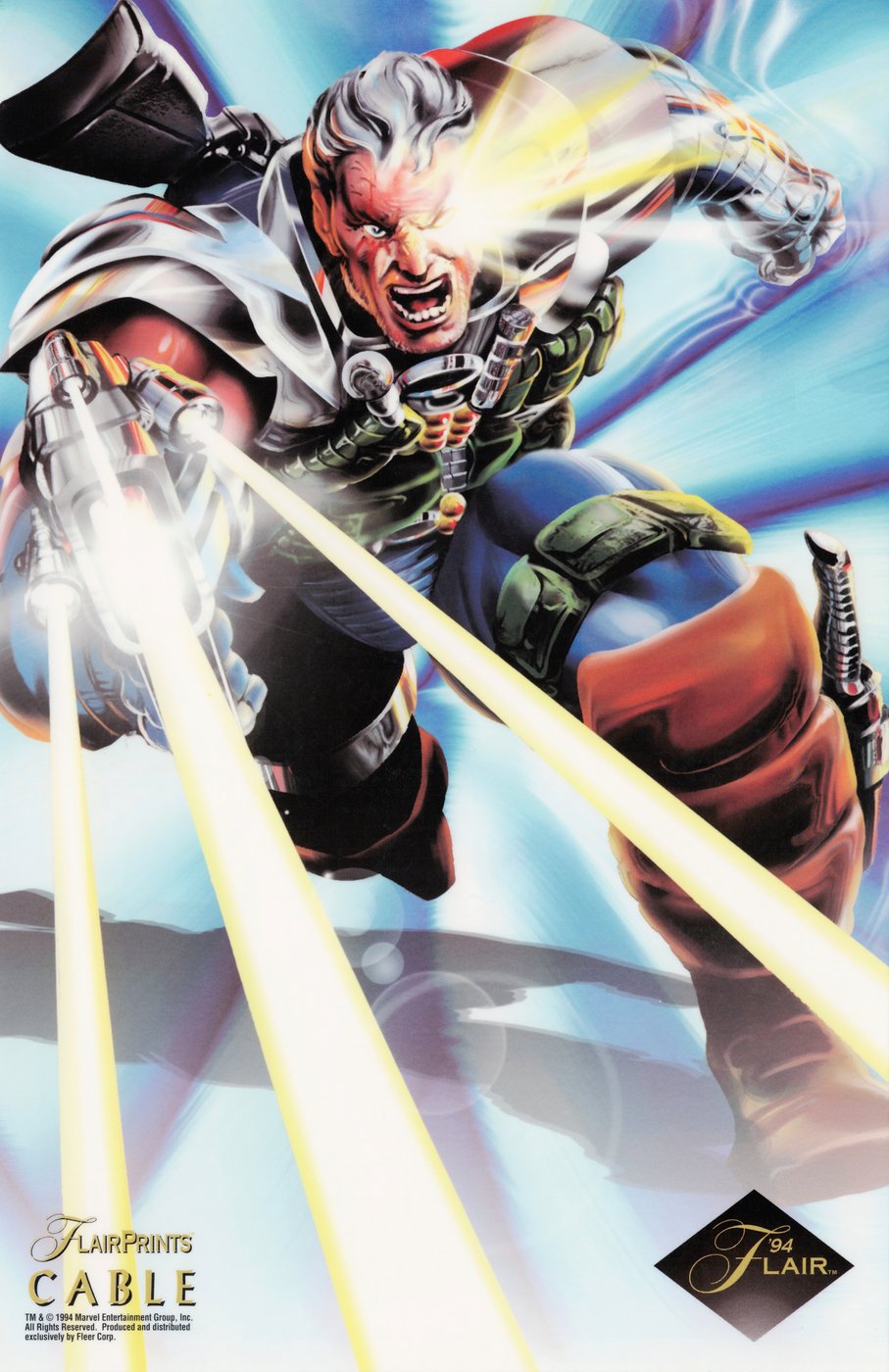
Flairprints were a case bonus, not a pack card. At 6½″ × 10″ they enlarged Powerblast #1–10 art and added the Flair ’94 logo and the character’s name. The backs are blank except for UPC 0 41199 00258 1. Ten of them. Tap one.
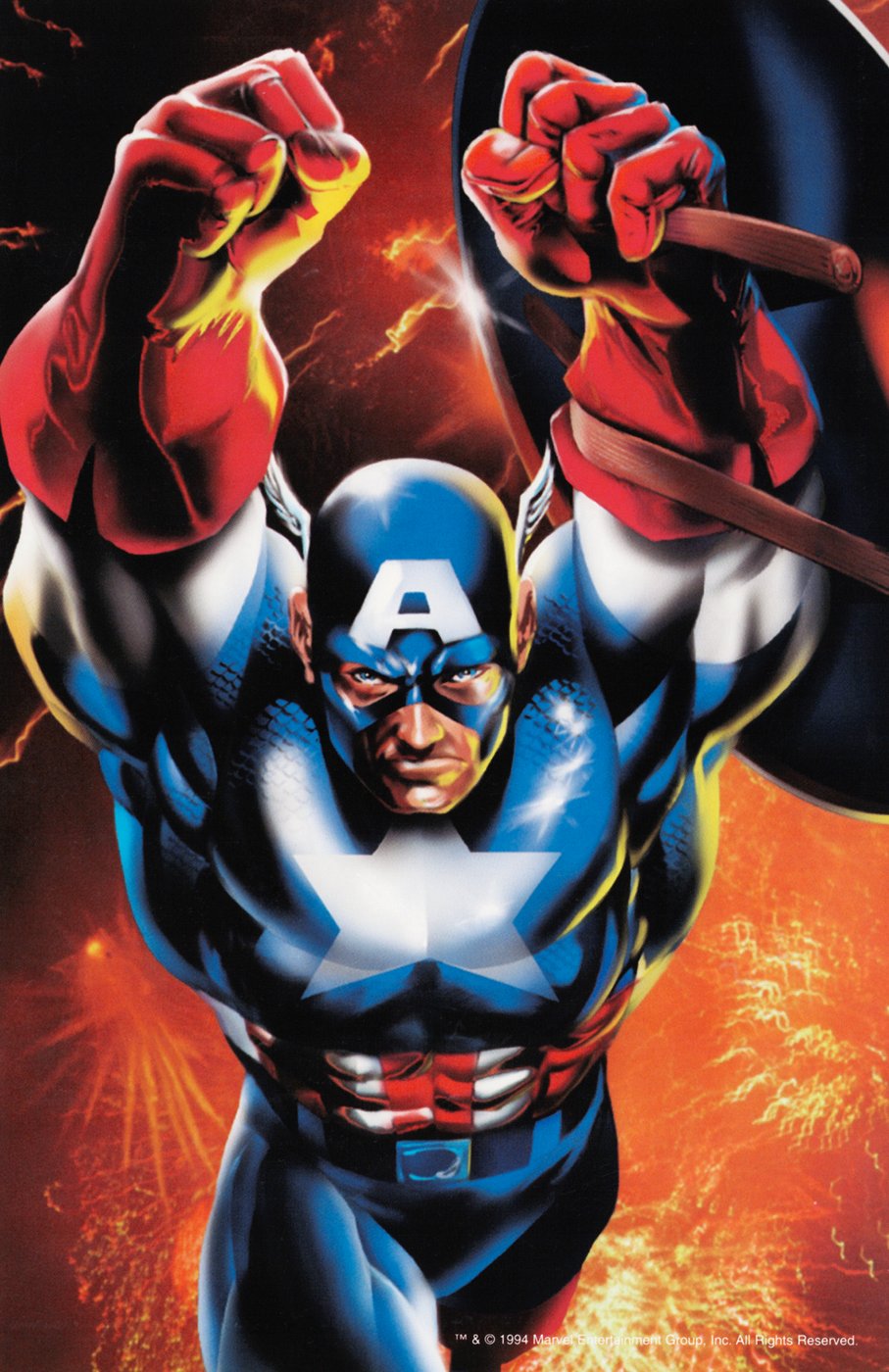
Five oversized inserts. They reuse Powerblast #11–15 art without the metallic finish, with no Flair ’94 logo and no character title. The backs are completely blank. Collectors found 2 or 3 in a binder. The Spider-Man insert was verified inside a sealed 1995 Fleer Ultra X-Men binder. The checklist does not lock a release month, and some may have been promotional. These are the photographed inserts.
Captain America. Powerblast #11 art. Uncanny X-Men #268, page 1. Jim Lee. No logo, no title, no metallic finish.
Promos
Sheets in the polybag.
Before the packs, distributor Flairprints went out. Deadpool, with the Heroes World / Special Sales Conference seal, and one with no seal. Omega Red vs. Wolverine, including the one Diamond handed out at its Annual Retailer Seminar in Baltimore, June 11–14, 1994. Then the uncut sheets.
The 4-card strip.
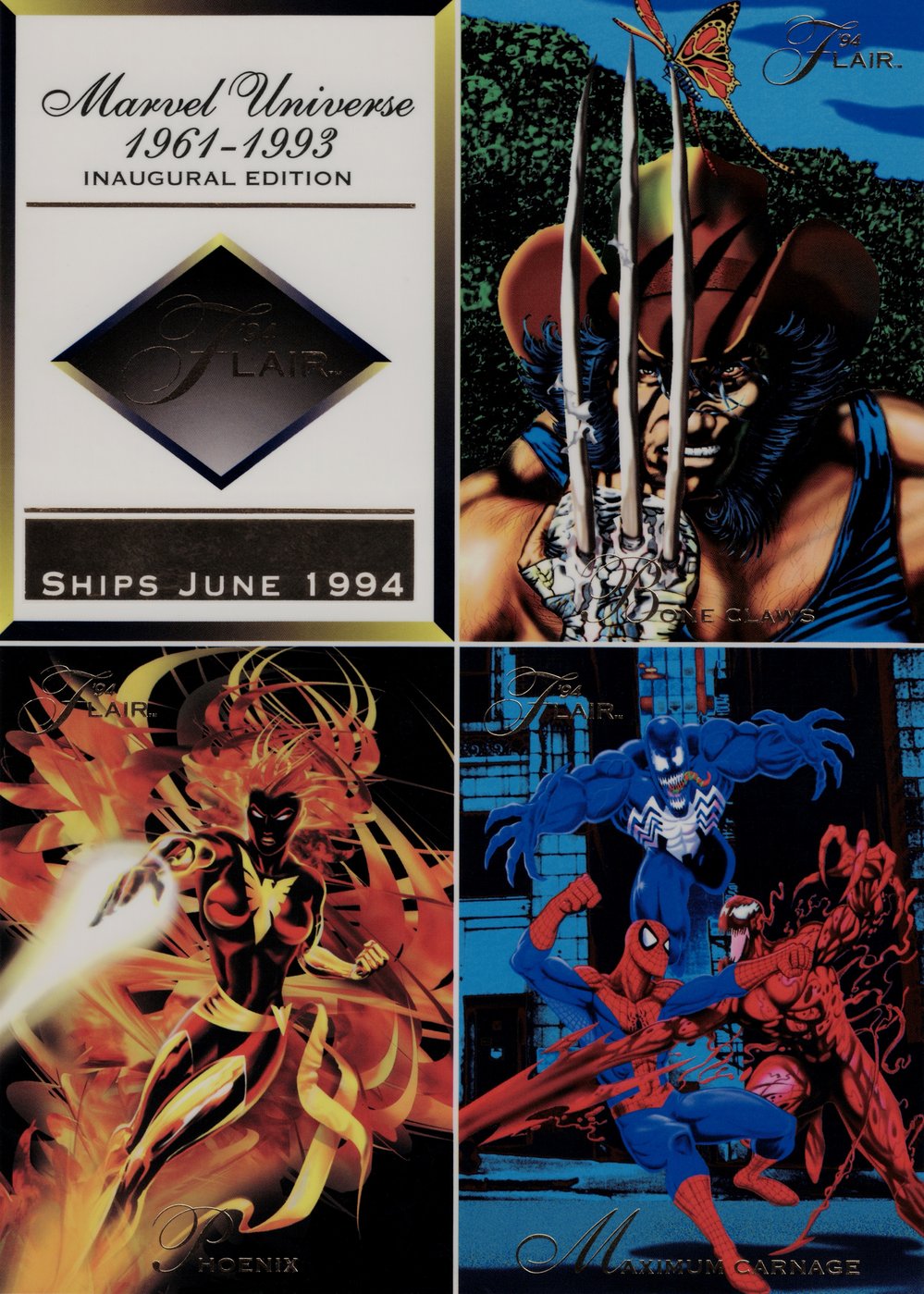
Double-sided 5″ × 7″ sheets, bundled with Wizard #35, Advance Comics #67, and Marvel Age #138, all July 1994, and with Tuff Stuff’s Collect! in June 1994. Released fronts share a lineup: the Flair title card, Bone Claws, Phoenix, Maximum Carnage. The Wizard sheet is reported to be the gold-foil etched version. Zoom, then tap a card.
The 9-card press sheet.
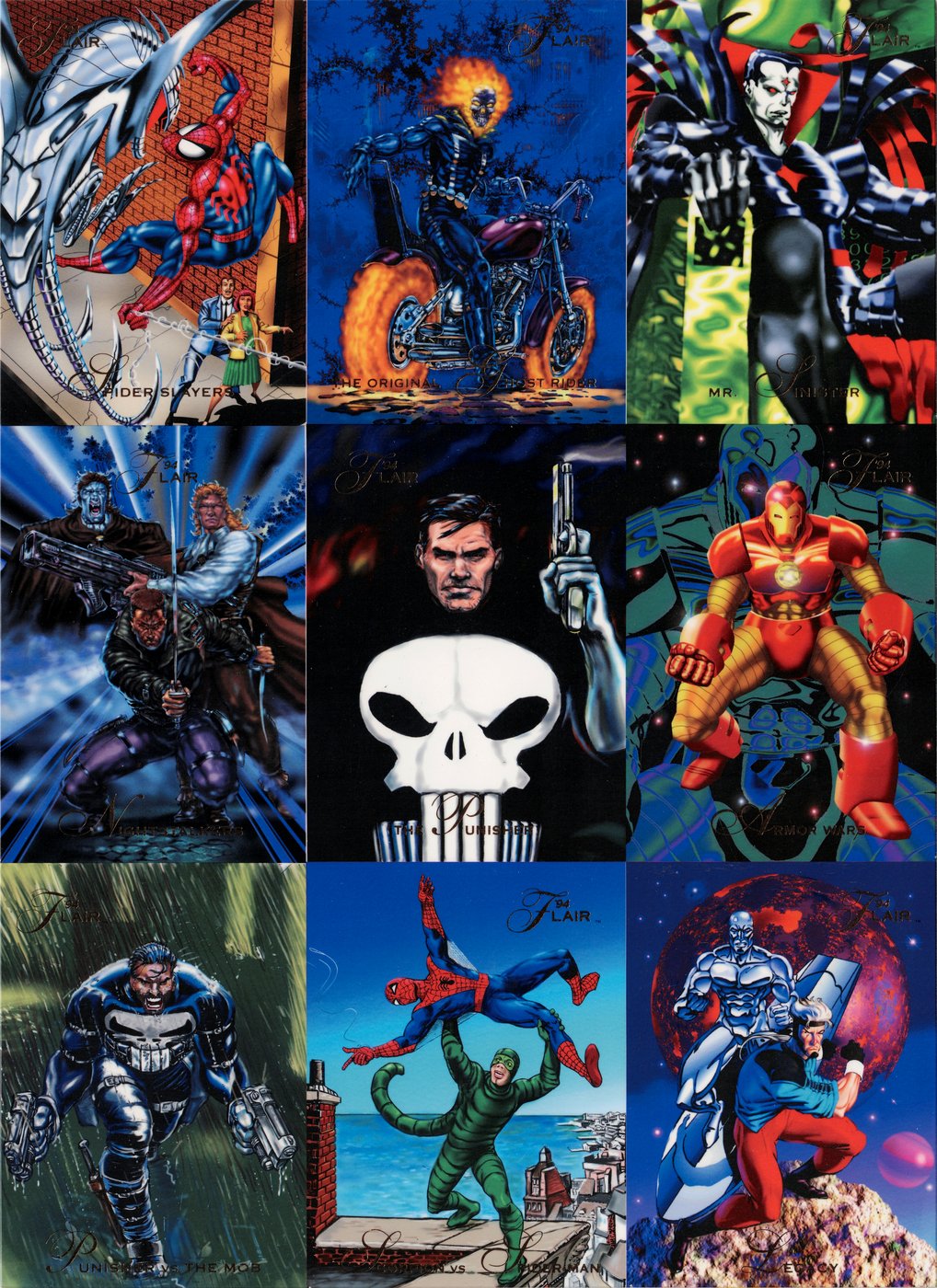
Nine uncut 9-card sheets, 7⅝″ × 10⅝″, came in Fleer’s 1994 media press kit: a Wolverine folder, the sheets, single cards of Blade and Terrax, and press documents on Marvel letterhead. Preview material, never sold in packs. Which sheet came in which kit isn’t documented. Numbers run left to right, top to bottom. An asterisk on the checklist marks an unnumbered card. The photograph below is sheet9-2.jpg. The cards printed on it are not the checklist’s “Sheet 2” grid. They match the grid the checklist numbers as sheet 8. Tap a card to open it.
Left to right, top to bottom: #92 Spider Slayers, #30 The Original Ghost Rider, #56 Mr. Sinister, #93 Nightstalkers, #33 The Punisher, #59 Armor Wars, #87 Punisher vs. the Mob, #15 Scorpion vs. Spider-Man, #133 Legacy.
Magazines
The issue that told the story, and the ones that carried a sheet.
Marvel Age #138, July 1994, is the backbone: Jerry A. Novick’s pages 26–28, and a 4-card promo sheet in the bag. The scans and the digital transcription live on the checklist. Open a page from a quote above, or start at the spread.
These carried a Flair ad. A sheet in the bag is a separate fact, and the checklist does not claim one for every title here.
Ads
“Drool here.”
Three ad pages are on the checklist. Fleer ran a newsprint version in Marvel comics, a glossy magazine version with Powerblast art, and a separate ad for the Flairprints. Tap one.
Comics that carried the newsprint ad
Indexed from the Grand Comics Database and from period copies. Fleer ran it beside its other 1994 lines, so more issues from these months likely carried it too. A year with no month is how the checklist records it.
Release timeline
From the first ad to the open files.
Every date below is on the checklist or in Marvel Age #138. Approximate means the source did not lock a day or a month.
May 1994
The first indexed ad
Fantastic Four #388 carries the newsprint “Inaugural Edition” ad. Tuff Stuff’s Collect! runs the glossy magazine ad the same month.
June 1994 · announced
Ships June 1994
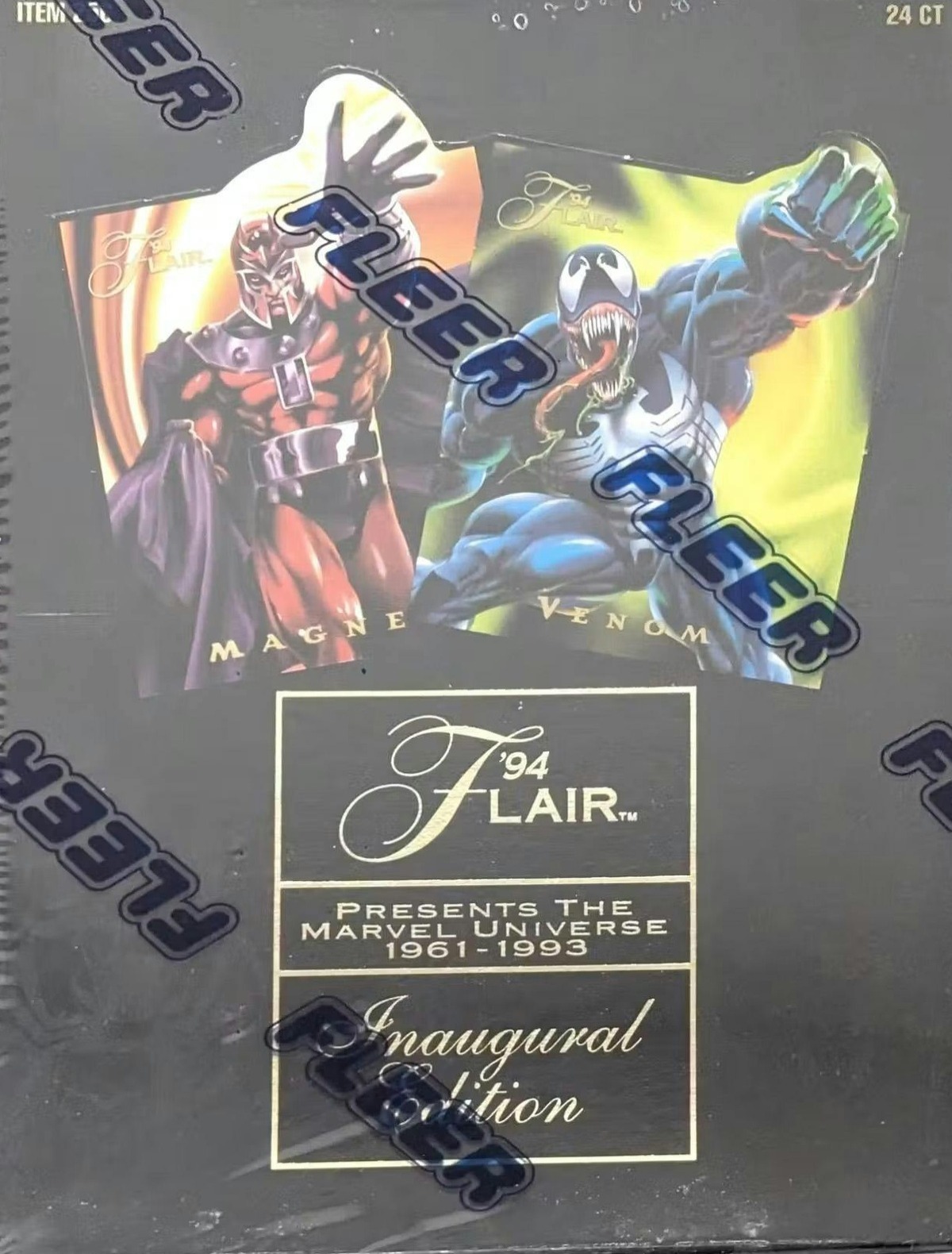
That line is etched and stickered on the promo sheets. Marvel Age, written for the July issue, said mid-June. The issued hobby box held 24 packs of 10, four covers, and about 12 Powerblasts. The preview’s 36-pack box and 20-card chase were not what shipped.
June 1994
More comic ads, and a sheet
The newsprint ad is in Fantastic Four Unlimited #6, Amazing Spider-Man #390, and The Punisher #91. Tuff Stuff’s Collect! comes with a 4-card sheet.
June 11–14, 1994
Diamond, Baltimore
Omega Red vs. Wolverine promo Flairprint, handed out at Diamond’s Annual Retailer Seminar. A second Omega Red promo names no distributor.
1994 · day not published
Heroes World Con
Deadpool promo Flairprint with the Special Sales Conference seal. nslists places it at the con. No day range is published. A second Deadpool promo has no seal.
July 1994
Marvel Age #138
The preview article, pages 26–28, and a 4-card sheet. Wizard #35 is polybagged with a sheet reported as the foil-etched version. Advance Comics #67 comes with a sheet. Glossy ads run in Tuff Stuff’s Collect!, Cards Illustrated #7, and Hero Illustrated #13, which carries the Flairprints ad.
August 1994
The glossy ad keeps going
Collector’s Sportslook and Tuff Stuff’s Collect! Star Trek.
September 1994
The latest dated comic ad
Excalibur #78. Spectacular Spider-Man #214 is July. Several other indexed issues are recorded only as 1994, with no month: Fantastic Four Annual #27, X-Men #33, X-Factor #103, X-Men Adventures #5, Blackwulf #2, Northstar #3.
1995 · month not locked
Binder inserts
The Spider-Man insert was verified in a sealed 1995 Fleer Ultra X-Men binder, 2 or 3 inserts in a binder. The checklist does not lock the release window. Some may have been promotional.
1995 · catalog date, unresolved
The Phoenix lead
FigureRealm’s catalog dates Toy Biz’s Dark Phoenix Saga 4-pack to 1995, after the cards. That box is the closest lead for Powerblast #5, not a confirmed source.
No date on the checklist
Still open
Card #37, Black Cat, is unsolved. Hobgoblin #44 and Bishop #85 have sources and no identified artist. Those are research findings, not a calendar entry.
The studio
Hold the card.
One card at a time. Tap to flip. Move the pointer for the foil, or use phone tilt. Swipe for the next card. Drag the source bar. Spread the pile, then pick one up.
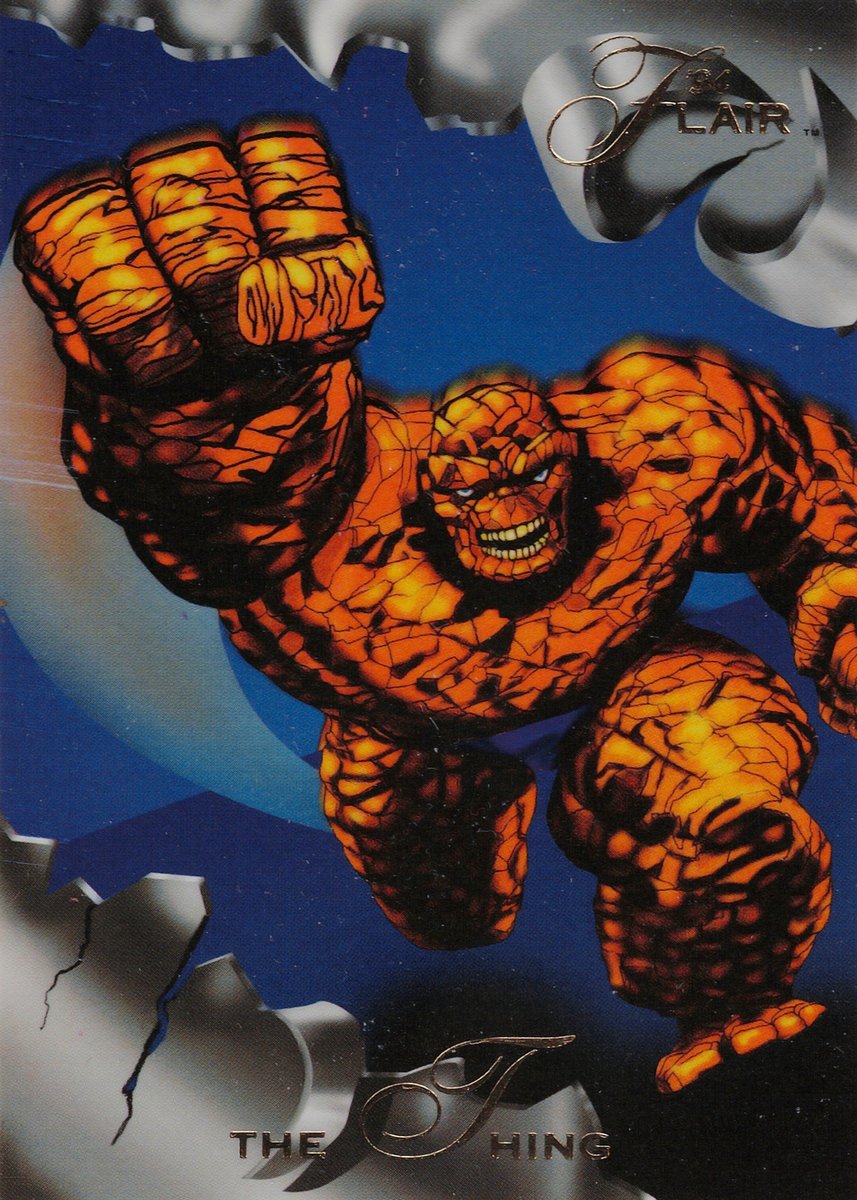
Base #1
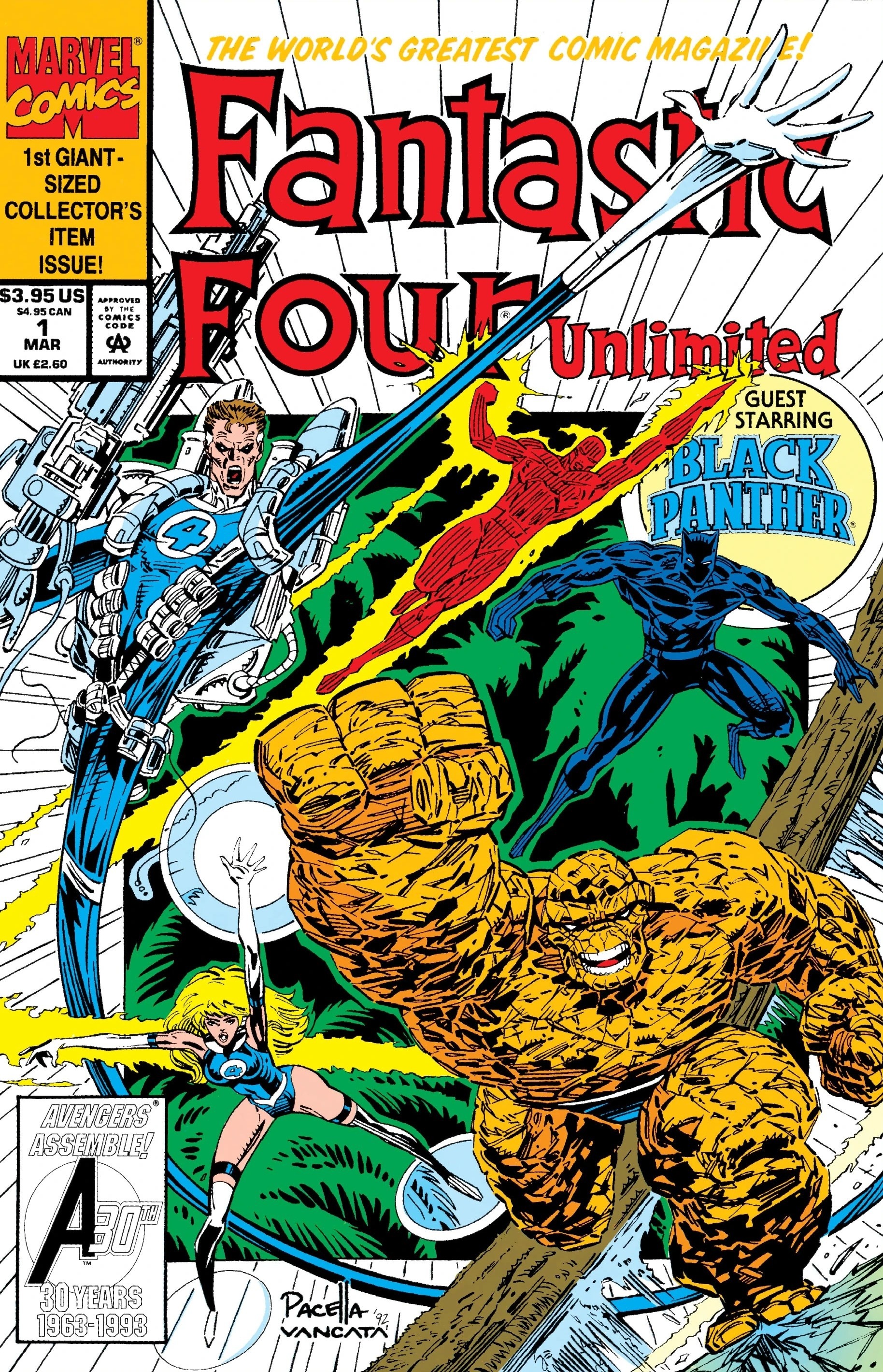
The Thing
Fantastic Four Unlimited (1993) #1 cover. Pencils by Mark Pacella, inks by Brad Vancata.
#37 · no source on file
Loose repaint · left page, right card
Closest lead, not confirmed
The unsolved files
Not every card gives up its secret.
The ’94 Flair cards credit no artists. Collectors have long said the designs were taken from comics and retouched. Most of the set has been traced. A few files are still open.
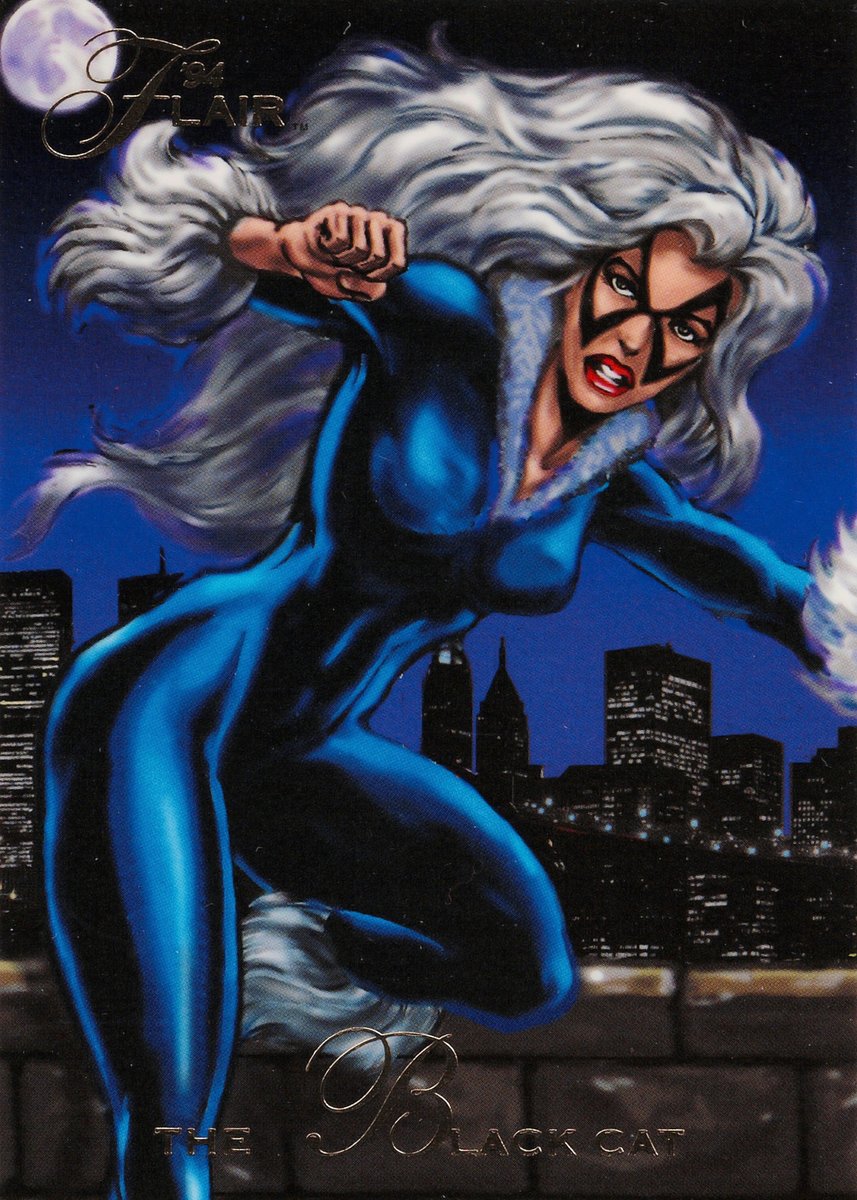
#37 Black Cat.
She leaps toward you, fist raised and hair streaming, with the moon and a city skyline behind her. The card is “Spider-Man meets the Black Cat.” It is unsolved.
We compared her against about 45 Black Cat covers and pin-ups from 1979 to 1994, including all four covers of her 1994 solo series. We also tried two reverse image searches, 1994 Marvel Age previews, TSR’s role-playing game books, toys, pinball, and View-Master. Not one matches.
The only other place this art turns up is the 1994 Mexican Pepsi set, card #28 “Gata Negra,” which reprints Flair. Its back has a Marvel copyright and no artist.
The leading theory, drawn from Marvel Age #138’s account of art prepared in-house, is that these are unpublished in-house inks. That is a theory. No evidence has turned up for it.
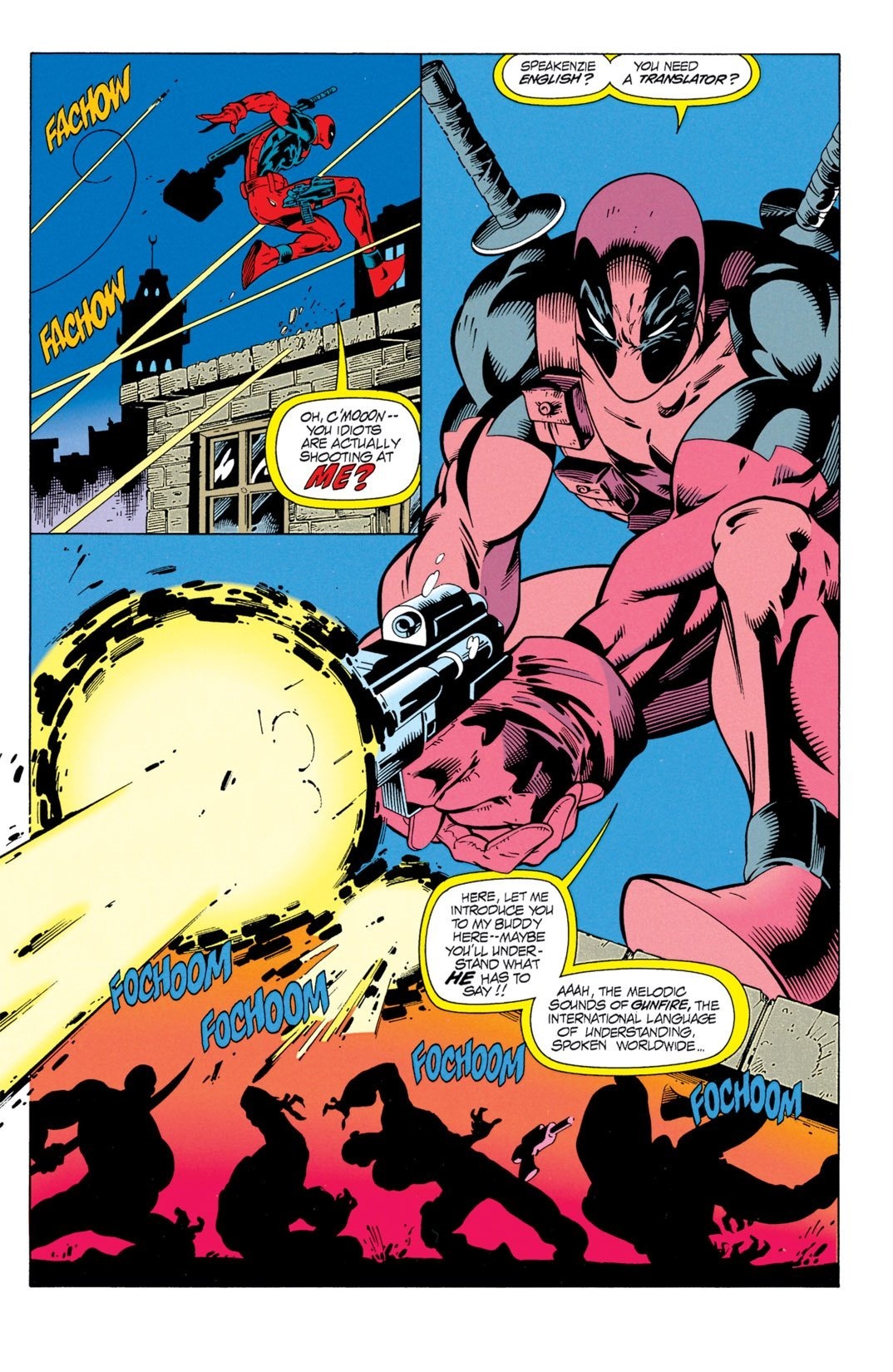
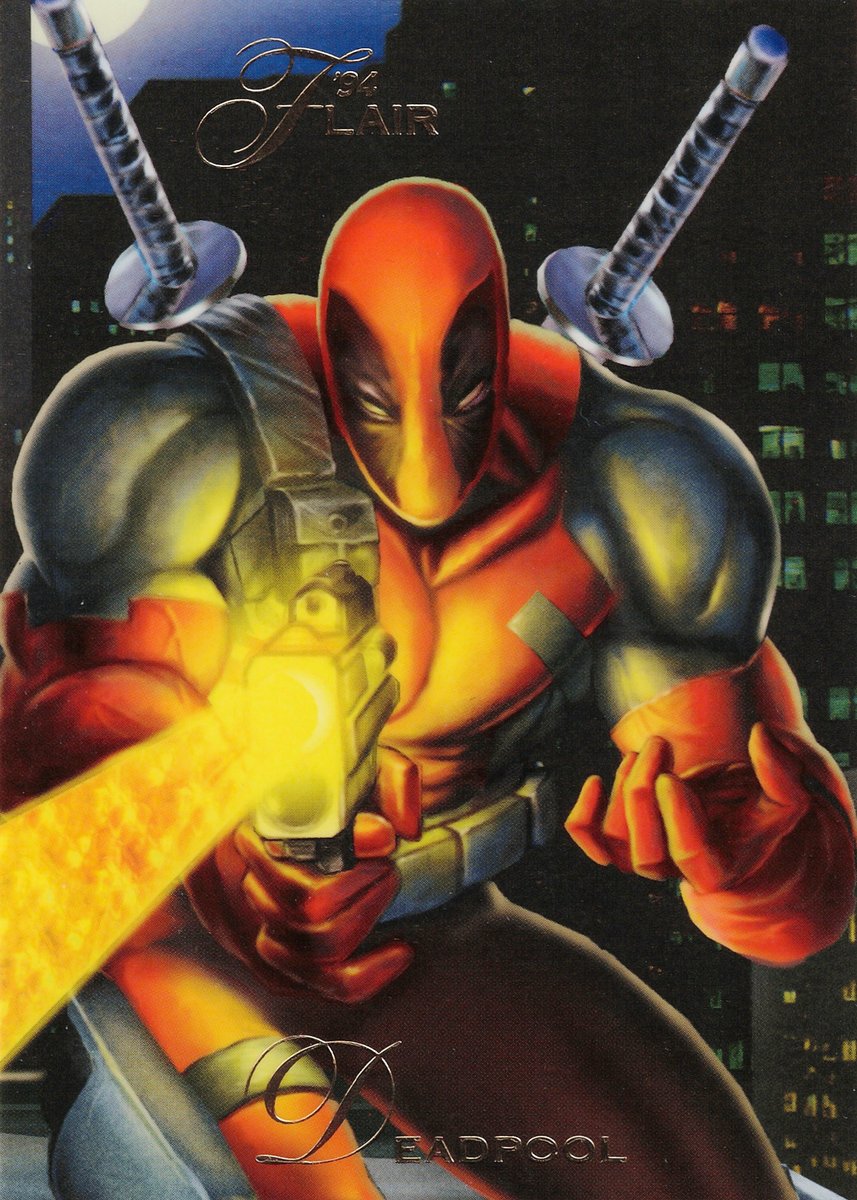
#78 Deadpool, a loose repaint.
The checklist credits Deadpool: The Circle Chase #2, page 5, Joe Madureira. The crouch, the swords, the gun blast, and the rooftop line up. The head, the gun arm, and an extra open hand do not. It stays labeled a loose repaint. The card back cites New Mutants #98, Deadpool’s first appearance. That is the story the card refers to, not where the art came from.
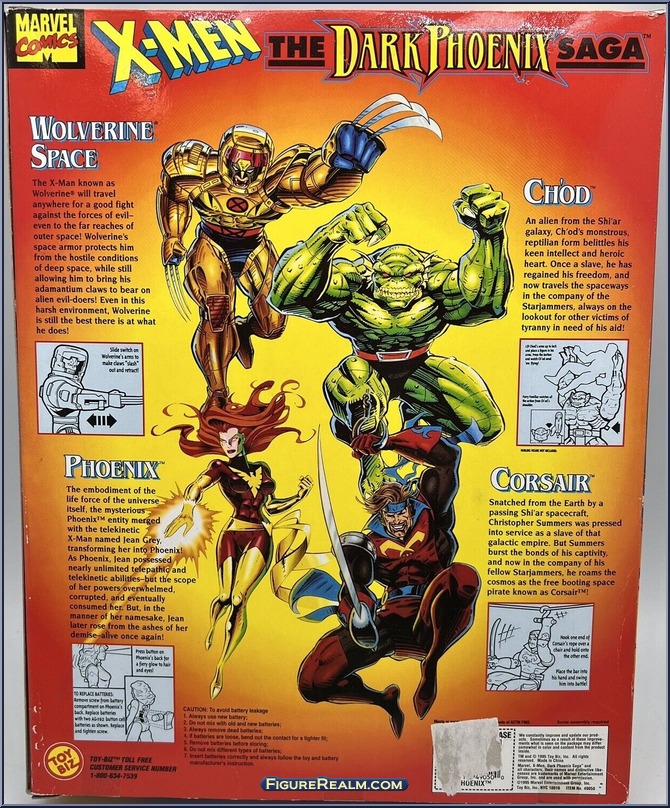
Phoenix. Closest lead, not confirmed.
The closest lead, not confirmed, is Toy Biz’s Dark Phoenix Saga 4-pack box art (item 49050, an FAO Schwarz exclusive, with Phoenix, Corsair, Ch’od, and a space-suited Wolverine). The same art appears on the Phoenix Saga figure card (49385). The poses are near, about a 15 to 20 percent match: the arm and leg are close, but the head, the hair, and the collar are not. The artist is unknown. Bart Sears designed the figures and has said other artists drew the package art. FigureRealm’s catalog dates the 4-pack to 1995, after these cards came out in 1994, so the release date of the box art is unresolved.
Two artists still missing.
#44 Hobgoblin is the 1987 five-foot store display. #85 Bishop is Comic Images T-shirt MVS868, 1993. The sources are above. The artists are unknown.
If you have a 1990s Marvel store display, a style guide, a licensing sheet, or original art that looks familiar, the checklist is where it belongs. Collectors solved most of this set. They can solve the rest.
Excelsior
Every card. Every source. Every open question.
The full checklist is the set as issued: 150 base cards, 18 Powerblasts, 10 Flairprints, 5 binder inserts, the promos, the sheets, and the ads. Marvel Age #138 is in References, scans and transcription.